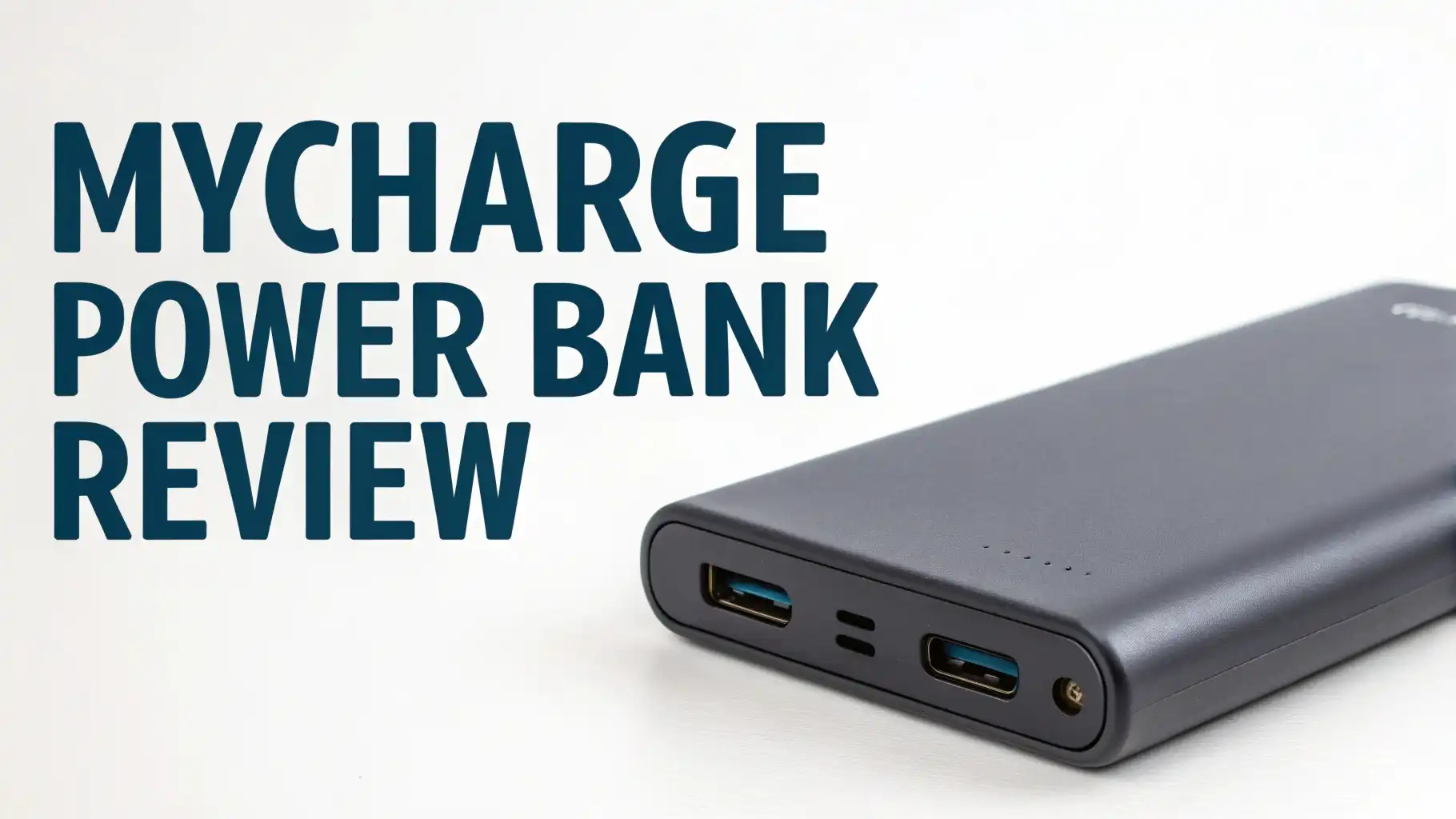
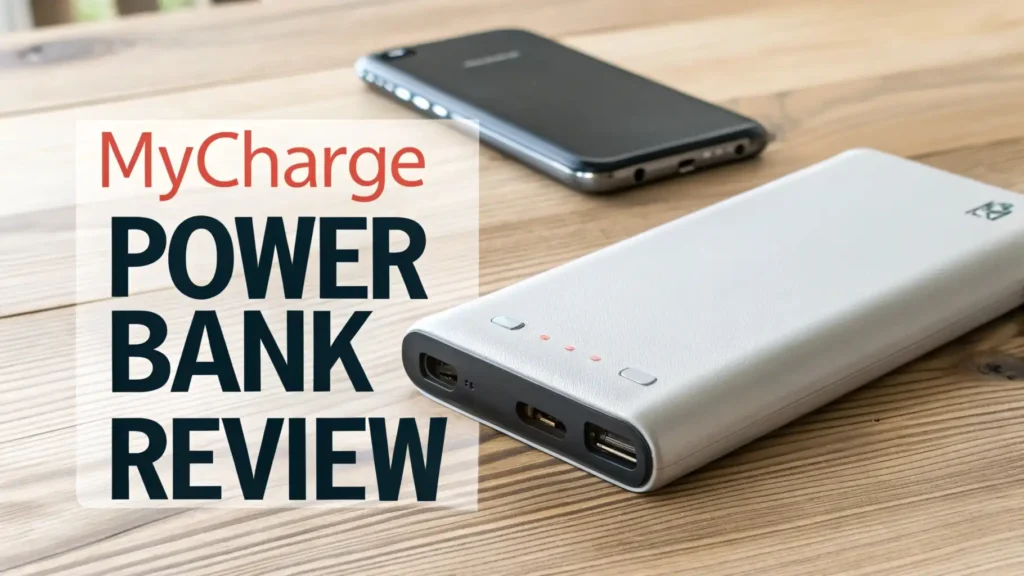
myCharge Power Bank Review: A Comprehensive Guide
Running out of battery power at the worst possible time is a modern nightmare we all face. You are streaming your favorite show, capturing that perfect photo, or navigating through an unknown city when your phone dies.
myCharge has become a trusted name in portable charging solutions. The brand focuses on creating power banks that solve real problems.
This review explores the best myCharge power banks available on Amazon right now. You will discover which model fits your lifestyle perfectly.
Key Takeaways:
- Built-in Convenience: myCharge power banks come with integrated Lightning and USB-C cables already attached. You never need to remember or carry separate charging cables again.
- Wall Plug Integration: Many models feature foldable wall plugs built directly into the charger. This means you can recharge your power bank without carrying another adapter.
- Fast Charging Technology: These portable chargers support Power Delivery and Quick Charge 3.0 protocols. Your devices charge up to 50% faster than standard chargers.
- Rugged Outdoor Options: The Adventure series offers waterproof and dustproof designs with IP67 ratings. These chargers survive drops, splashes, and harsh outdoor conditions.
- Multiple Device Charging: Most myCharge models can power up to three devices simultaneously. The combination of built-in cables and USB ports provides maximum flexibility for your charging needs.

myCharge HubMax: The Ultimate All-in-One Portable Charger
The myCharge HubMax represents the pinnacle of convenient portable charging. This power bank eliminates every excuse for running out of battery.
The 10,050mAh capacity delivers enough power to charge your smartphone three to four times. The built-in Lightning cable works perfectly with iPhones. The integrated USB-C cable handles newer Android phones, tablets, and laptops. A standard USB-A port adds a third charging option.
The real game changer is the folding wall plug. You simply flip out the prongs and plug the HubMax directly into any wall outlet. No adapter needed. No extra cables required. The power bank recharges itself in about 3 hours.
Fast charging capabilities make a significant difference. Power Delivery technology pushes up to 18W through the USB-C connection. Quick Charge 3.0 speeds up charging through the micro-USB cable. Your devices charge 50% faster than with standard chargers.
The anodized aluminum body feels premium and durable. The compact size fits easily in your bag or large pocket. LED indicators show the remaining battery level at a glance.
myCharge PowerHub Mini: Pocket-Sized Power for Daily Use

Sometimes you need something smaller and lighter for everyday carry. The PowerHub Mini delivers 3,000mAh of charging capacity in an incredibly compact package.
This mini charger includes both Lightning and USB-C cables built into the body. These cables wrap neatly around the unit when not in use. The design keeps everything organized and tangle-free.
The 3,000mAh capacity provides about one full charge for most smartphones. This amount is perfect for emergency situations or light users. The charger adds up to 12 hours of extra battery life to your device.
The 12W turbo charging feature speeds up the charging process. Your phone reaches full battery much faster than with standard 5W chargers. The compact size makes this power bank ideal for purses, small bags, or even large pockets.
Black fabric covering gives the PowerHub Mini a premium look and feel. The material also provides a better grip compared to plastic alternatives. The price point makes this an affordable option for anyone wanting backup power without spending too much.
myCharge Adventure H2O: Waterproof Power for Outdoor Enthusiasts

Adventures take you to unpredictable places. Rain happens. Accidents occur near water. The Adventure H2O handles these challenges with ease.
The IP67 waterproof rating means this power bank survives submersion in up to 1 meter of water for 30 minutes. The rubberized exterior protects against drops and impacts. Dust and sand cannot penetrate the sealed design.
The 6,700mAh battery capacity provides two to three full charges for smartphones. This capacity offers up to 36 hours of extra battery life. You can camp for a weekend without worrying about dead devices.
Both USB-A and USB-C ports deliver up to 18W of fast charging power. The Adventure H2O charges two devices simultaneously. Rubber port covers keep water and debris out when not charging.
The carabiner loop allows you to attach the charger to your backpack or belt loop. The bright blue color makes it easy to spot in your gear. Outdoor enthusiasts, hikers, campers, and beach lovers find this model essential for their adventures.
The durable construction means this power bank lasts through years of rough use. The Adventure H2O proves that portable chargers can handle serious outdoor conditions.
Top 3 Alternatives for myCharge Power Banks


Understanding Power Bank Capacity: What mAh Really Means
The mAh number tells you how much energy a power bank stores. Higher numbers mean more charges for your devices.
A smartphone battery typically ranges from 3,000mAh to 5,000mAh. A 10,000mAh power bank can charge most phones twice. The actual number depends on conversion losses and your phone battery size.
Power banks lose about 20-30% efficiency during the charging process. This loss comes from heat generation and voltage conversion. A 10,000mAh power bank delivers approximately 7,000mAh of usable power.
Smaller capacities (3,000-5,000mAh) work well for emergency top-ups. They keep devices charged through a busy day. These sizes fit easily in pockets and purses.
Medium capacities (6,000-10,000mAh) offer the sweet spot for most users. They provide multiple charges without excessive weight or bulk. These power banks handle travel days and long events comfortably.
Large capacities (20,000mAh+) suit heavy users and multiple device charging. They keep tablets, laptops, and phones powered during extended trips. The trade-off is increased size and weight.
Fast Charging Technologies Explained Simply
Modern power banks support various fast charging standards. Understanding these helps you choose the right charger.
Power Delivery (PD) is the universal fast charging standard for USB-C devices. It delivers up to 100W of power. Most phones use 18W to 30W. PD charges compatible devices up to 70% faster than standard charging.
Quick Charge 3.0 is Qualcomm’s fast charging technology. It works with many Android phones. Quick Charge delivers up to 18W of power. Devices charge about 50% faster compared to regular chargers.
Standard USB charging delivers 5W of power. This charging speed works but takes much longer. Most people find standard charging frustratingly slow by modern standards.
myCharge power banks combine multiple fast charging technologies. This approach ensures compatibility with virtually every device. Your iPhone charges fast with PD. Your Android phone speeds up with Quick Charge.
Built-in Cables vs Traditional Power Banks
The built-in cable design offers massive advantages over traditional power banks.
You never forget cables at home. The cables are permanently attached to the power bank. This design eliminates the most common charging frustration.
Fewer items to carry makes packing simpler. Traditional setups require the power bank plus multiple cables. Built-in designs reduce your gear to one compact unit.
Faster deployment means you start charging immediately. No digging through bags for cables. No untangling knots. You simply grab the power bank and plug in your device.
The cables wrap neatly around myCharge devices. This organization prevents damage and keeps everything tidy. The cables are reinforced at stress points for durability.
Some users prefer traditional power banks with removable cables. This approach offers flexibility to replace damaged cables. However, built-in cables rarely break with normal use. The convenience far outweighs the theoretical flexibility of separate cables.
Safety Features That Protect Your Devices
Quality power banks include multiple safety protections. myCharge incorporates these features across their product line.
Overcharge protection stops charging when devices reach 100% battery. This feature prevents battery damage from excessive charging. Your devices maintain optimal battery health longer.
Short circuit protection immediately shuts down power if wires cross or malfunction. This safety feature prevents sparks, fires, and device damage.
Temperature control monitors heat levels during charging. The power bank reduces power or stops charging if temperatures get too high. This protection prevents overheating issues.
Voltage regulation ensures devices receive the correct power level. Fluctuations can damage sensitive electronics. Stable voltage keeps your expensive devices safe.
Safe-Cell technology in myCharge products adds extra battery protection. Premium battery cells resist swelling and degradation. These cells maintain capacity through hundreds of charging cycles.
Comparing myCharge Models: Which One Should You Buy
Choosing the right myCharge depends on your specific needs and usage patterns.
Get the HubMax if you want maximum convenience and capacity. The built-in wall plug and 10,000mAh battery make this the most versatile option. Business travelers and heavy users benefit most from this model.
Choose the PowerHub Mini for lightweight daily carry. The 3,000mAh capacity handles emergency charges perfectly. Students and light users appreciate the compact size and affordable price.
Select the Adventure H2O for outdoor activities and rugged use. The waterproof design survives harsh conditions. Hikers, campers, and beach enthusiasts need this durable protection.
Consider capacity requirements based on your device usage. Count how many charges you typically need per day. Add one extra charge for safety margin.
Think about portability versus power needs. Smaller chargers fit pockets but offer fewer charges. Larger capacity means more weight and bulk.
How to Maximize Your Power Bank Lifespan
Proper care extends your myCharge power bank lifespan significantly. These simple practices make your investment last longer.
Keep charge levels between 20-80% whenever possible. Lithium batteries last longest when avoiding extreme empty or full states. This practice can double your battery lifespan.
Avoid extreme temperatures during storage and use. Heat degrades battery chemistry faster. Cold temperatures temporarily reduce capacity. Room temperature storage preserves battery health.
Use quality charging cables and adapters when recharging your power bank. Cheap accessories can damage the charging circuit. Stick with reputable brands or the included cables.
Charge your power bank every 3 months even when not using it. Batteries slowly self-discharge during storage. Periodic charging prevents deep discharge damage.
Clean charging ports regularly with compressed air. Dust and debris cause poor connections. Clean ports ensure efficient charging and prevent port damage.
Real User Experiences with myCharge Products
Actual user reviews reveal important insights about myCharge power banks. Thousands of customers share their experiences on Amazon and other platforms.
The convenience factor receives universal praise. Users love never searching for cables. The built-in wall plug eliminates adapter hassles. Many reviewers mention these features justify the higher price.
Build quality earns consistent positive feedback. The aluminum bodies feel premium and durable. Users report power banks lasting years with regular use. The Adventure series particularly impresses outdoor enthusiasts.
Charging speed meets or exceeds expectations. Devices charge noticeably faster than with standard chargers. Users appreciate the time savings during busy days.
Capacity accuracy matches advertised specifications. The power banks deliver the expected number of charges. This honesty contrasts with some cheaper brands that exaggerate capacity.
Customer service receives mixed reviews. Some users report excellent support responses. Others mention difficulty reaching help when needed. This inconsistency appears in many electronics companies.
Traveling with Power Banks: Important Rules to Know
Air travel with power banks requires following specific regulations. These rules protect passengers from battery fire risks.
Airlines allow power banks up to 100Wh in carry-on baggage. This limit equals approximately 27,000mAh. All myCharge models fall well below this threshold.
You must carry power banks in cabin baggage. Checked baggage prohibits lithium battery devices. This rule applies to all airlines worldwide.
Remove power banks during security screening. Place them in a separate bin like laptops. This practice speeds up the security process.
Some countries impose stricter regulations than others. Check destination rules before traveling. Middle Eastern countries sometimes apply lower capacity limits.
Turn off power banks before boarding aircraft. Active charging during flights sometimes causes concern from crew members. Keeping devices off avoids potential issues.
Price vs Value: Are myCharge Power Banks Worth It
myCharge products cost more than generic alternatives. The price difference reflects genuine value additions.
Generic power banks start around $10-15 for 10,000mAh capacity. These options require separate cables and adapters. Build quality varies widely. Many cheap power banks exaggerate capacity specifications.
myCharge models range from $30-80 depending on features. The built-in cables, wall plugs, and fast charging justify higher prices. Premium materials and reliable performance add value.
Calculate the total cost including cables and adapters. A generic power bank plus quality cables costs $20-25. The price gap narrows significantly.
Consider convenience value beyond pure dollars. The time saved and frustration avoided matter. Never forgetting cables or adapters makes travel and daily use smoother.
Durability affects long-term value. A $15 power bank lasting one year costs more than a $50 charger lasting five years. myCharge devices typically survive years of regular use.
Environmental Impact and Battery Recycling
Electronic waste poses serious environmental challenges. Responsible power bank usage includes proper disposal.
Lithium batteries contain valuable materials worth recycling. Cobalt, lithium, and nickel can be recovered and reused. Recycling reduces mining needs for new materials.
Never throw power banks in regular trash. Batteries can leak toxic chemicals into soil and water. They may also cause fires in garbage trucks and landfills.
Retail stores like Best Buy offer free electronics recycling. Many locations accept power banks and batteries. Some cities provide special e-waste collection days.
Manufacturer take-back programs help recycle old devices. Check myCharge website for recycling options. Some brands offer discounts on new products when recycling old ones.
Extend device lifespan before considering disposal. Proper care makes power banks last longer. Longer use reduces overall environmental impact more than recycling.
Frequently Asked Questions
How long does it take to fully charge a myCharge power bank?
A myCharge power bank with 10,000mAh capacity takes approximately 3-4 hours to fully recharge using the built-in wall plug. The actual time depends on the wall outlet power and the charger’s current charge level. Models with built-in wall plugs charge faster than those requiring external adapters. Using fast charging wall adapters can reduce charging time by up to 30%.
Can I take myCharge power banks on airplanes?
Yes, you can take all myCharge power banks on airplanes in your carry-on baggage. Airlines permit lithium battery power banks up to 100Wh, which equals approximately 27,000mAh. All myCharge models fall well below this limit. You must keep power banks in cabin baggage, not checked luggage. Remove them during security screening for separate inspection.
How many times can a 10,000mAh power bank charge my phone?
A 10,000mAh power bank typically charges a smartphone 2-3 times depending on your phone battery size. Most modern phones have batteries between 3,000-5,000mAh. Power banks lose about 20-30% efficiency during energy transfer. This loss means a 10,000mAh charger delivers approximately 7,000-8,000mAh of usable power to your devices.
Are myCharge power banks compatible with all phone brands?
Yes, myCharge power banks work with all major phone brands including iPhone, Samsung, Google, LG, and Motorola. Models with built-in Lightning cables charge iPhones directly. USB-C cables handle newer Android phones and tablets. The USB-A ports provide universal compatibility. The fast charging features work automatically with compatible devices.
What does IP67 waterproof rating mean for the Adventure series?
An IP67 rating means the myCharge Adventure H2O can survive submersion in up to 1 meter of water for 30 minutes. The power bank is completely dust-proof. It handles rain, splashes, and accidental drops in water. However, this rating does not mean the charger works underwater. You should dry it completely before charging devices after water exposure.
How long do myCharge power banks last before needing replacement?
myCharge power banks typically last 300-500 full charging cycles before capacity drops noticeably. One cycle means fully charging and discharging the battery. With average use, this lifespan translates to 2-3 years. Proper care including keeping charge levels between 20-80% can extend lifespan significantly. The physical construction often outlasts the battery itself.
Do built-in cables wear out faster than removable ones?
Built-in cables on myCharge power banks are reinforced at stress points and designed for durability. These cables rarely break with normal use. The fixed design actually prevents many common causes of cable failure like yanking, twisting, and door closures. Users report built-in cables lasting the entire lifespan of the power bank. The convenience benefits far outweigh any theoretical durability concerns.