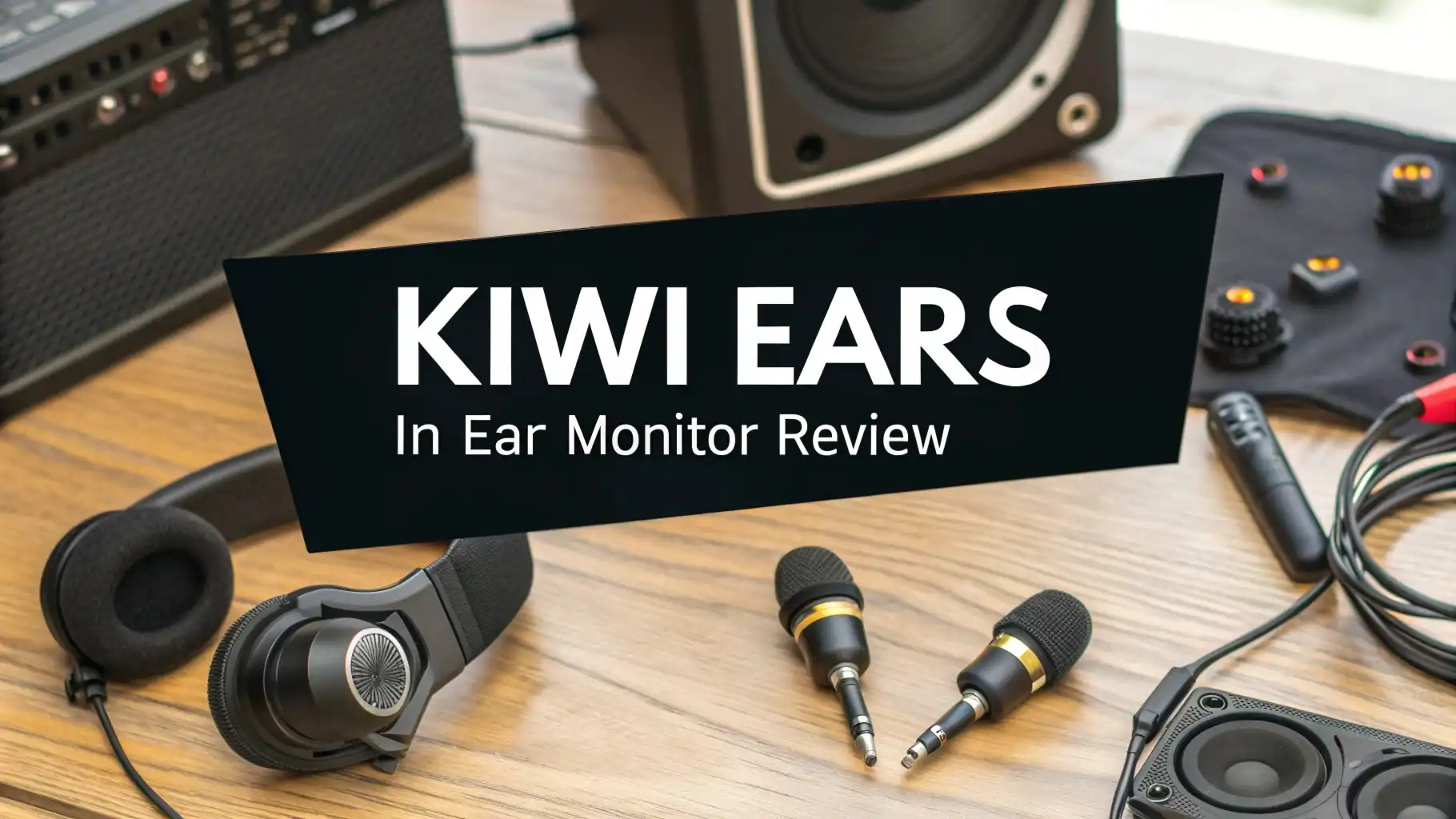
Kiwi Ears In Ear Monitor Review: Premium Sound Quality
Are you tired of spending hundreds on earbuds that promise amazing sound but deliver mediocre results? You’re not alone.
Audio enthusiasts everywhere are discovering that premium sound doesn’t always require a premium price tag. Enter Kiwi Ears, a brand that’s shaking up the IEM market with products that punch way above their weight class.
Whether you’re a musician who needs accurate monitoring, a gamer seeking immersive soundscapes, or simply someone who appreciates excellent audio quality, this review will show you exactly what makes Kiwi Ears stand out in a crowded marketplace.
Key Takeaways
- Hybrid driver technology combines balanced armature and dynamic drivers for superior sound separation and clarity across all frequencies
- Price range from $35 to $200 offers options for budget-conscious buyers and serious audiophiles alike
- Detachable cable design with standard 2-pin connectors allows easy upgrades and replacement, extending the lifespan of your investment
- Comfortable ergonomic shells made from medical-grade resin provide hours of fatigue-free listening for extended sessions
- Versatile sound signatures cater to different preferences, from bass-heavy V-shaped tuning to balanced neutral profiles
- Professional-grade performance suitable for studio monitoring, live performances, gaming, and critical listening applications

Kiwi Ears Forteza: The Sweet Spot for Most Listeners
The Forteza represents excellent value in the Kiwi Ears lineup. This hybrid IEM combines one balanced armature driver with two dynamic drivers.
That three-way crossover delivers distinct sound across bass, mids, and treble ranges. The configuration creates a V-shaped signature that excites without overwhelming.
Bass lovers will appreciate the Forteza’s low-end response. The dual dynamic drivers produce thick, textured bass with satisfying punch. Kick drums slam with authority.
Bass guitar lines rumble with presence. The slower decay adds warmth that makes electronic music and hip-hop particularly enjoyable. Yet the bass stays controlled enough to avoid muddying other frequencies.
Midrange presentation leans toward warmth. Vocals sit comfortably in the mix without getting lost. Guitars have body and texture.
The slightly recessed upper mids prevent harshness on aggressive recordings. This tuning choice prioritizes listening comfort over analytical precision, making these great for extended music enjoyment.
Top 3 Alternatives for Kiwi Ears In Ear Monitors


Kiwi Ears KE4: Premium Performance Redefined

The KE4 represents Kiwi Ears’ flagship approach to hybrid design. This model features two custom 10mm dynamic drivers paired with two balanced armature units.
The completely redesigned driver configuration targets sub-bass impact and midrange clarity. This setup creates a sound signature that feels both powerful and refined.
Sub-bass performance stands out immediately. The dual dynamics focus on deep frequencies, delivering kick drum and bass guitar with remarkable presence. The low end has genuine impact without bloating into mid-bass.
This controlled approach maintains clarity while providing the physical sensation that makes music feel alive. Electronic music fans and bassheads will find plenty to love here.
Midrange tuning leans rich and full. The lower mids have warmth that gives male vocals and guitars pleasing body. Female vocals float clearly above the mix.
Kiwi Ears Quartet: Balanced Excellence

The Quartet takes a balanced approach to hybrid design. This model pairs two dynamic drivers with two balanced armature drivers in an elegant configuration. The hand-crafted resin shell comes in beautiful purple finish that looks genuinely premium. This is an IEM that sounds as good as it looks.
Low-end emphasis defines the Quartet’s character. The dual dynamics create powerful bass response you can truly feel. There’s noticeable midbass presence that gives kick drums satisfying slam.
Bass guitar lines have weight and texture. This tuning favors impact over neutrality, making it perfect for genres that demand strong low-frequency presence.
Treble sparkles with adequate extension. The balanced armatures handle high frequencies with decent detail retrieval. Cymbals have presence without harshness. The treble never competes with the bass for attention, creating a fun, engaging sound signature that prioritizes enjoyment over strict accuracy.
Kiwi Ears Canta: Innovation Meets Performance

The Canta showcases innovative driver technology with its hybrid configuration. This model combines one dynamic driver with two planar magnetic drivers.
This unusual arrangement creates unique sound characteristics that set it apart from traditional designs. The planar drivers add speed and detail that complement the dynamic driver’s bass prowess.
Bass response benefits from the dynamic driver’s natural advantages. Low frequencies have good impact and texture. The bass extends deep without feeling bloated.
There’s enough punch to satisfy most listeners while maintaining control. The planar drivers don’t contribute much to bass, allowing the dynamic to shine in its strength area.
Midrange clarity improves significantly thanks to planar technology. These drivers respond quickly with minimal distortion. Vocals have excellent detail and naturalness.
Instruments separate clearly in complex passages. The speed and precision of planar drivers elevate the midrange beyond what pure dynamic designs achieve at this price.
Kiwi Ears Aether: Planar Magnetic Excellence

The Aether goes all-in on planar magnetic technology. This model features a large 15.3mm planar driver in each earpiece. This configuration delivers the speed, precision, and detail that make planar drivers legendary. The Aether aims to bring high-end planar performance to accessible pricing.
Sound signature leans toward balance rather than exaggerated frequencies. The planar driver handles all frequencies with consistent speed and low distortion. Bass extends deep with excellent control. Mids shine with natural timbre and detail.
Treble sparkles without harshness. This tuning favors accuracy over excitement, appealing to listeners who value neutrality.
Soundstage impresses for a closed-back IEM. The planar driver creates wide presentation with good depth. Instruments occupy distinct positions. Imaging accuracy helps track individual elements in complex mixes. This spatial performance makes the Aether excellent for gaming and movies as well as music appreciation.
Sound Quality Analysis Across the Range
Kiwi Ears demonstrates remarkable consistency in sound quality philosophy across different models. Every IEM in their lineup shows careful tuning attention. They avoid the common budget trap of boosting bass and treble while scooping mids. Instead, each model presents coherent sound that serves musical enjoyment.
Driver integration deserves special mention. Hybrid designs can suffer from crossover issues where different drivers don’t blend seamlessly. Kiwi Ears generally handles this well.
Transitions between frequency ranges sound natural. You don’t hear obvious handoffs between drivers. This cohesive presentation makes their IEMs easy to listen to for extended periods.
The brand offers different sound signatures to match listener preferences. The Forteza and Quartet lean toward V-shaped tuning with emphasized bass and treble.
The KE4 and Aether aim for more balanced presentations. The Canta offers something between these extremes. This variety means most listeners can find a Kiwi Ears model matching their taste.
Build Quality and Design Philosophy
Every Kiwi Ears IEM showcases attention to construction that exceeds typical budget expectations. The brand uses medical-grade resin for shells.
This material feels premium while remaining lightweight. The smooth finish resists scratches and maintains appearance over time. These feel like products from companies charging much more.
Faceplate designs add visual appeal without gaudiness. Some models feature attractive patterns and colors. Others maintain understated elegance.
The variety means you can choose based on aesthetic preferences. The faceplates also identify left and right easily, though cable orientation provides additional guidance.
Detachable cables use standard 2-pin connectors. This universal standard means abundant upgrade options. You can replace damaged cables cheaply.
You can experiment with premium cables if desired. The included cables already provide good quality with minimal microphonics. This flexibility extends product life significantly compared to fixed-cable designs.
Cable Quality and Connectivity Options
The standard 2-pin detachable cables provide significant advantages. These connectors follow industry standards used by countless IEM manufacturers. If a cable fails, replacements cost little. If you want to experiment with different cable materials or designs, options abound. This modularity represents smart design thinking.
Included cables meet quality expectations for each price point. Budget models come with basic OFC copper cables that work well.
More expensive models might include silver-plated or upgraded cables. All show good strain relief at connection points. The cables resist tangling reasonably well. Microphonic noise stays minimal with proper wear.
The cables terminate in standard 3.5mm plugs. This universal connector works with phones, music players, computers, and audio interfaces.
You don’t need adapters or dongles for basic use. Some users might prefer balanced connections for certain sources. The standard 2-pin connectors make balanced cable upgrades simple when desired.
Comfort and Fit for Extended Listening
Ergonomic shell design proves crucial for professional and enthusiast use. Kiwi Ears shapes their housings to follow ear contours naturally.
The smooth resin doesn’t create pressure points. Most models nestle securely without feeling intrusive. This comfort allows the hours of wear that musicians, gamers, and audio professionals require.
The lightweight construction prevents ear fatigue. Even models with larger shells like the Aether remain comfortable for extended sessions. The balanced weight distribution means they don’t pull or shift during movement. This stability matters for active use whether exercising, commuting, or performing on stage.
Tip selection affects fit significantly. Most Kiwi Ears models include multiple silicone tip sizes. Finding the right size ensures proper seal for bass response and isolation.
The tips use standard nozzle diameters, so aftermarket options from companies like SpinFit or Final Audio work perfectly. Experimenting with different tips can optimize both comfort and sound.
Gaming Performance and Spatial Audio
Gamers increasingly recognize that quality IEMs outperform gaming headsets for competitive play. Kiwi Ears models excel in gaming applications.
The detailed sound reproduction helps pinpoint enemy positions. The wide soundstage creates immersive environments. The comfort allows marathon gaming sessions without fatigue.
Imaging accuracy particularly benefits competitive gaming. Models like the Aether and KE4 create precise spatial cues. You can track footsteps directionally with confidence.
Gunshots, vehicle sounds, and environmental audio occupy distinct positions. This positional audio gives tactical advantages in multiplayer games where awareness matters.
The fast transient response captures quick sounds accurately. Gunfire has proper impact and detail. Explosions feel dynamic without overwhelming. Subtle sounds like reloading or ability cooldowns remain audible in chaotic battles. The clarity prevents important audio cues from getting lost in the mix.
Music Genre Versatility
The various Kiwi Ears sound signatures suit different musical genres. The V-shaped models like Forteza and Quartet excel with electronic music, hip-hop, and rock.
The emphasized bass brings energy to these genres. The sparkling treble adds excitement to synths and cymbals. These models make dance music truly feel alive and energetic.
Balanced models like the KE4 handle diverse genres competently. Classical music benefits from the natural timbre and soundstage. Jazz sounds intimate and detailed.
Acoustic performances feel genuine. The neutral tuning doesn’t favor particular genres, making these models versatile all-rounders for listeners with varied tastes.
The planar-equipped Aether brings technical prowess to complex music. Progressive rock, metal, and orchestral pieces benefit from the detail retrieval.
The fast drivers handle rapid passages without congestion. Layered productions maintain clarity even when many instruments play simultaneously. This technical ability reveals details that simpler IEMs miss entirely.
Value Proposition in the IEM Market
Kiwi Ears disrupts traditional price-to-performance expectations. Their entry-level models compete with IEMs costing twice as much. Their mid-range offerings challenge products at triple the price.
This value proposition stems from efficient manufacturing in Shenzhen’s technology hub combined with direct-to-consumer sales approaches.
Comparing to established brands reveals the value clearly. A $59 Forteza delivers sound quality matching $150 options from bigger names. The $143 KE4 performs like IEMs that typically cost $300 or more. This pricing pressure benefits consumers by making quality audio accessible to more people.
The value extends beyond initial purchase. The detachable cables mean repairs cost little when cables fail.
The durable construction suggests these IEMs will last years with proper care. The standard connectors ensure compatibility with future upgrades. The total cost of ownership remains low compared to proprietary or fragile designs.
Comparison with Competitors
Against KZ models like the ZSN Pro X, Kiwi Ears generally offers more refined tuning. KZ delivers impressive technical specs but sometimes emphasizes quantity over quality.
The treble can sound harsh. The bass might overwhelm. Kiwi Ears takes a more balanced approach that prioritizes listening enjoyment over specification sheets.
Compared to Moondrop, another popular value brand, Kiwi Ears offers different strengths. Moondrop often targets more neutral, reference tuning.
Kiwi Ears provides more variety in sound signatures. Both brands deliver excellent value, but Kiwi Ears might appeal more to listeners wanting excitement over strict accuracy.
Who Should Buy Kiwi Ears IEMs
Musicians and audio professionals benefit tremendously from these IEMs. The accurate monitoring capabilities suit studio work and live performance. The comfort allows extended wear during recording sessions or gigs.
The affordable pricing means backup pairs don’t strain budgets. The sound quality meets professional standards without professional prices.
Audiophiles on budgets find genuine performance here. These IEMs demonstrate what careful tuning and quality drivers achieve.
You can experience hybrid and planar technologies without extreme investment. The sound quality satisfies discerning ears while leaving money for music sources and amplification. This represents smart spending for audio enthusiasts building systems.
Gamers seeking competitive advantages should consider these seriously. The imaging and detail retrieval exceed gaming headsets. The comfort suits marathon sessions. The lack of gamer aesthetics might disappoint some, but the performance advantages matter more for competitive play.
What Are the Main Differences Between Kiwi Ears Models
The driver configuration represents the primary difference between models. Entry-level options use single dynamic drivers or simple hybrid setups.
Mid-range models employ more sophisticated hybrid arrangements with multiple drivers per frequency range. Top-tier options incorporate planar magnetic technology for enhanced technical performance.
Sound signature tuning varies deliberately across the lineup. Some models target V-shaped excitement. Others aim for balanced neutrality.
A few emphasize particular frequencies for specific use cases. This variety lets buyers choose based on personal preferences rather than settling for one-size-fits-all tuning.
Build materials and aesthetics improve with price. Budget models use simpler shell designs with basic finishes. Premium models feature hand-crafted resin, attractive faceplates, and more refined details.
The cable quality also scales with price, though even budget cables perform adequately. These visual and tactile differences justify some of the price gaps.
Tips for Getting the Best Sound
Tip selection significantly impacts performance. Try all included tip sizes to find the best seal. The proper seal ensures bass response and isolation.
Poor seal causes weak bass and sound leakage. Consider aftermarket tips from specialized manufacturers. Different tip materials and shapes can fine-tune the sound signature to your preferences.
Source quality matters more than many realize. While Kiwi Ears IEMs work fine from phones, they scale up with better sources. Dedicated digital audio players reveal more detail.
Desktop amplifiers provide better control and dynamics. Even affordable DAC dongles can improve the listening experience noticeably over phone headphone jacks.
Burn-in remains controversial in audio circles. Some listeners report subtle improvements after dozens of hours of use. Others hear no difference.
The scientific evidence remains inconclusive. If you try burn-in, use moderate volume with varied music. Whether real or placebo, the effect seems subtle at most for these IEMs.
Frequently Asked Questions
Do Kiwi Ears IEMs require amplification
Most Kiwi Ears models work perfectly from phones and portable players. The impedance levels stay reasonable for mobile devices. However, dedicated amplifiers can provide better control and dynamics. Desktop setups benefit more from amplification than portable use. For casual listening from phones, amplification is not necessary.
How does the warranty work for Kiwi Ears products
Kiwi Ears typically provides standard manufacturer warranties. The specific terms depend on where you purchase. Buying from authorized retailers like Amazon or Linsoul ensures warranty coverage. Keep purchase receipts for warranty claims. The build quality generally proves reliable, making warranty claims relatively rare.
Can I use these IEMs for phone calls
The standard Kiwi Ears IEMs lack built-in microphones. You can hear calls perfectly but cannot speak through them. Some sellers offer cable options with inline microphones. These mic cables work for phone calls and voice chat. For serious communication needs, consider separate microphones instead.
How do I clean and maintain my Kiwi Ears IEMs
Remove ear tips and clean them separately with mild soap and water. Wipe the nozzles gently with dry cloth or cotton swabs. Avoid getting moisture in the driver housings. Store in the included case when not in use. Replace ear tips when they become dirty or damaged. Proper maintenance extends the lifespan significantly.
Are Kiwi Ears IEMs better than wireless earbuds
For pure sound quality, wired IEMs like Kiwi Ears typically surpass wireless options at similar prices. Wireless earbuds offer convenience and features like active noise cancellation. Wired IEMs provide better audio fidelity, no battery concerns, and lower latency. The choice depends on whether you prioritize convenience or audio quality.
Which Kiwi Ears model should I buy first
The Forteza represents the best starting point for most people. It offers excellent value with engaging sound signature. The price stays accessible while the performance impresses. If you want more refined sound, consider the KE4. If you want to try planar technology, look at the Canta or Aether. Match the model to your budget and sound preferences.
How long do Kiwi Ears IEMs typically last
With proper care, these IEMs should last years. The main failure point is usually the cable, which is easily replaceable. The driver housings prove durable with careful handling. Avoid extreme temperatures and moisture. Store properly when not in use. Many users report years of reliable service from their Kiwi Ears IEMs.
Can I replace the cable with any 2-pin cable
Yes, Kiwi Ears uses standard 2-pin connectors. You can use cables from many manufacturers. Ensure the pin spacing matches standard 0.78mm configuration. Both straight and angled connectors typically work. This compatibility gives you extensive upgrade and replacement options from numerous cable manufacturers.