JBL Flip 6 vs Flip 7: Which Speaker Should You Buy in 2026?
Choosing the right portable Bluetooth speaker can feel overwhelming when two models look so similar yet promise different experiences.
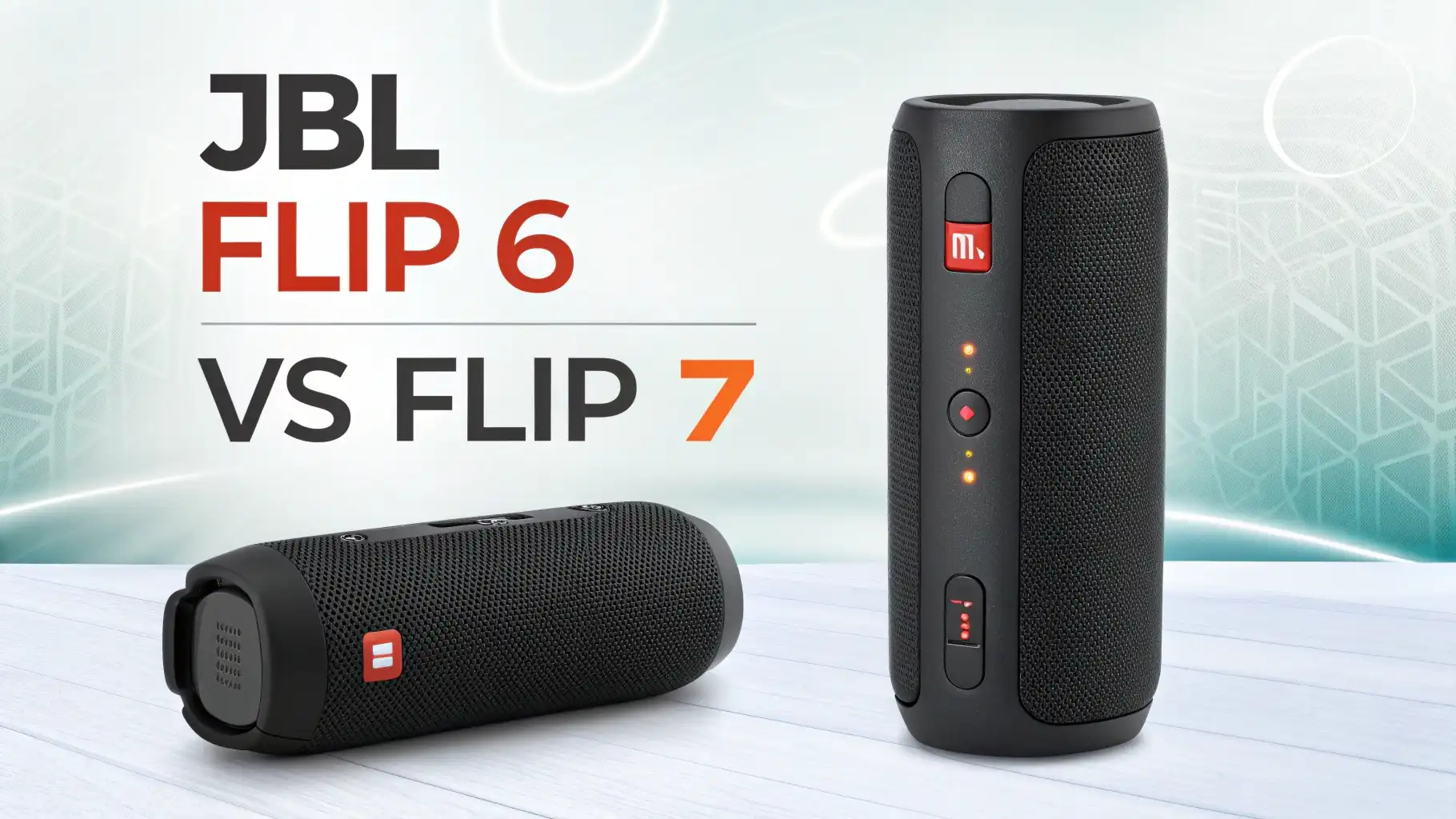
The JBL Flip 6 and JBL Flip 7 sit at the heart of this decision. Both speakers deliver powerful sound in a compact package. Both promise durability and portability. But which one deserves your money in 2026?
This complete comparison guide breaks down every detail you need to know. We examine design changes, sound quality differences, battery performance, new features, and real value.
Key Takeaways
- Performance and Features: The Flip 7 introduces AI Sound Boost technology and a 7-band equalizer for precise sound customization, while the Flip 6 offers a simpler 3-band EQ. The Flip 7 also supports lossless audio over USB-C, making it better for audiophiles who use services like Apple Music or Tidal.
- Durability Upgrade: The Flip 7 comes with IP68 waterproof rating (submersion up to 1.5 meters for 30 minutes) and drop-proof protection from one meter, compared to the Flip 6’s IP67 rating (submersion up to 1 meter).
- Battery Life: The Flip 7 claims 16 hours of playtime (with PlayTime Boost feature), while the Flip 6 offers 12 hours. However, the Flip 7’s extended battery mode reduces bass quality, so real-world performance sits around 13 hours for both models.
- Connectivity Differences: The Flip 7 uses Auracast technology for pairing with other speakers, while the Flip 6 uses PartyBoost. These systems are not compatible with each other, so consider which JBL speakers you already own.
- Price Point: Both speakers are currently priced around $99.95 on Amazon in 2026, making them equally affordable. The Flip 7 offers better value with its newer features at the same price point.
Design and Build Quality
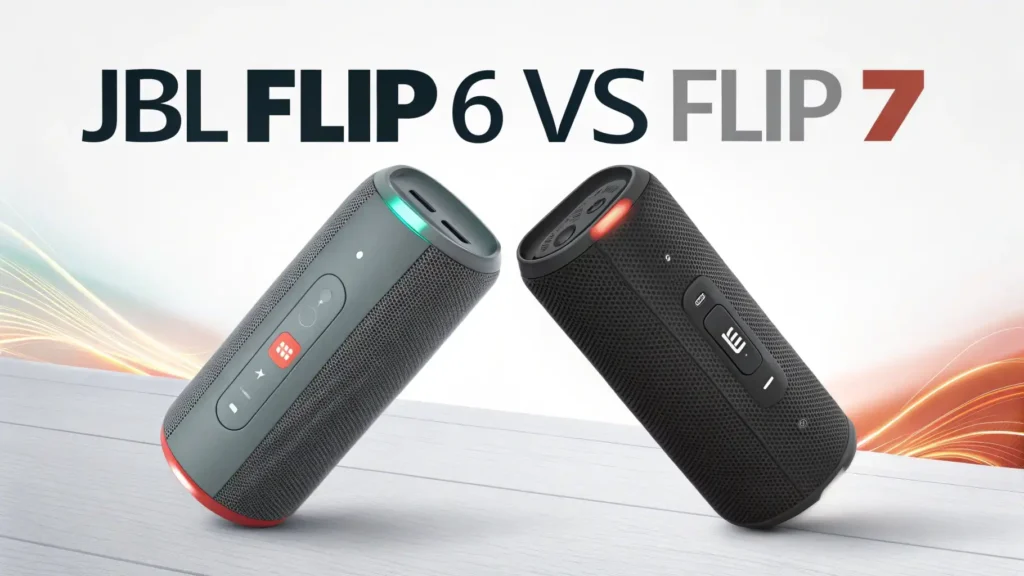
The Flip 6 and Flip 7 share the same iconic cylindrical shape that has defined the Flip series. Both speakers measure approximately 7 inches long and feature the durable fabric covering that stands up to outdoor adventures. The weight difference is minimal. You can slip either speaker into a backpack side pocket without thinking twice.
The fabric exterior on both models resists scratches and handles rough treatment. Both speakers feature exposed passive radiators at each end. These radiators vibrate visibly when the bass hits, creating a visual element that adds to the listening experience.
The Flip 7 makes some subtle but important improvements. The rubber bumpers protecting the passive radiators are slightly longer and thicker. This extra protection matters when you accidentally drop your speaker on concrete or rocks. The reinforced construction gives you more peace of mind during outdoor activities.
JBL Flip 6 Portable Bluetooth Speaker

Pros:
- Excellent sound quality with powerful bass for its size
- IPX7 waterproof rating handles rain and splashes
- PartyBoost works with many existing JBL speakers
- 12 hours of battery life covers most activities
- More affordable if you find it on sale
Cons:
- Only 3-band equalizer limits sound customization
- No lossless audio support
- Basic string loop attachment feels flimsy
- IP67 rating less protective than Flip 7
- Bluetooth 5.1 is older technology
Water Resistance and Durability
Water resistance separates good portable speakers from great ones. The Flip 6 earned an IPX7 waterproof rating. This rating means you can submerge the speaker in up to one meter of water for 30 minutes. You can use it poolside, at the beach, or even in the shower without worry.
The Flip 7 takes protection further with an IP68 rating. This upgrade allows submersion up to 1.5 meters for 30 minutes. The extra half meter might not sound significant, but it provides additional security if your speaker falls into deeper water. The IP68 rating also offers better dust protection, which matters in sandy or dusty environments.
JBL also added drop-proof certification to the Flip 7. The company tested drops from one meter onto concrete. The reinforced bumpers and internal structure can handle these impacts. This certification gives you confidence whether you’re hiking rocky trails or setting up speakers at a construction site.
Both speakers handle rain, splashes, and accidental submersion. The Flip 7 simply provides more protection if you need it. The fabric covering on both models dries quickly after getting wet. Neither speaker needs special care after water exposure.
JBL Flip 7 Portable Bluetooth Speaker

Pros:
- AI Sound Boost delivers enhanced audio performance
- IP68 rating with drop-proof protection from 1 meter
- 7-band equalizer provides precise sound control
- Lossless audio over USB-C for superior quality
- PushLock system with carabiner for easy attachment
- 16 hours battery life with PlayTime Boost feature
- Bluetooth 5.4 for better connectivity
Cons:
- PlayTime Boost reduces bass to extend battery
- Auracast not compatible with older PartyBoost speakers
- Slightly heavier than Flip 6
- No built-in microphone for calls
- Higher price than previous generation at launch
Carrying and Portability Features
The attachment system reveals one of the most practical differences between these speakers. The Flip 6 uses a simple fabric string loop attached to one end. You can thread a carabiner through this loop, but the thin string feels somewhat flimsy. It works, but it doesn’t inspire confidence for long-term use.
The Flip 7 introduces the PushLock system. This new attachment features a sturdy loop mount where you can quickly attach or remove accessories. JBL includes a metal carabiner in the box. The carabiner clips securely to backpacks, belt loops, or tree branches. The quick-release mechanism makes attachment and removal simple with one hand.
The PushLock system opens up accessory possibilities. JBL offers interchangeable accessories designed for this mounting system. You can add different colored loops, specialized mounts, or protective accessories. This modularity adds value over time as you customize your speaker setup.
Both speakers are genuinely portable. The cylindrical shape fits in cup holders, bottle pockets, and small bags. Neither speaker takes up much space. The weight stays manageable for all-day carrying during hikes or festivals.
Sound Quality and Audio Performance
Sound quality determines whether a portable speaker earns regular use or sits forgotten in a drawer. Both the Flip 6 and Flip 7 deliver impressive audio for their compact size. They share similar driver configurations and overall sonic character.
Both speakers feature JBL’s signature sound profile. You get strong bass response that surprises people when they first hear these small speakers. The midrange handles vocals clearly. The treble provides enough detail without becoming harsh or fatiguing.
The Flip 7 includes AI Sound Boost technology. This feature analyzes the music in real-time and adjusts the output to maximize clarity and impact. The AI processing helps prevent distortion at higher volumes. You can push the Flip 7 harder without the sound breaking up.
Objective testing shows the Flip 7 achieves a better distortion score than the Flip 6. This improvement means cleaner audio reproduction with less unwanted noise. The difference becomes noticeable when you play complex, layered music at higher volumes. Instruments stay more separated. Details remain clearer.
Both speakers are mono, not stereo. This limitation affects how music sounds compared to stereo speakers. Instrument separation isn’t as precise. Soundstage feels narrower. However, mono design offers one advantage: the sound spreads more evenly in all directions. Your music sounds consistent whether you’re standing in front of, beside, or behind the speaker.
Equalizer and Sound Customization
The equalizer capabilities reveal a significant difference between these models. The Flip 6 offers a 3-band equalizer in the JBL Portable app. You can adjust bass, midrange, and treble. This basic EQ helps you shape the sound, but your control remains limited.
The Flip 7 upgrades to a 7-band parametric equalizer. You can adjust seven different frequency ranges independently. This precision lets you fine-tune the sound to match your music preferences or compensate for different listening environments. You might boost certain frequencies for electronic music, then create a different profile for rock or classical.
The difference matters more than you might expect. With the Flip 7’s advanced EQ, you can reduce specific frequencies that sound harsh or boost the exact range where you want more impact. You can save multiple custom EQ profiles for different situations. This flexibility transforms how your music sounds.
The JBL Portable app works well on both iOS and Android. The interface feels intuitive. Creating and switching between custom EQ profiles takes just seconds. Both speakers remember your EQ settings even after powering off.
Connectivity and Pairing Options
Both speakers use Bluetooth as their primary connection method. The Flip 6 features Bluetooth 5.1, while the Flip 7 upgrades to Bluetooth 5.4. The newer Bluetooth version provides more stable connections and slightly better range. You’ll experience fewer dropouts when your phone is in another room or in your pocket.
Both speakers support Bluetooth multipoint connectivity. You can connect two devices simultaneously. This feature helps when multiple people want to take turns playing music. One person can play a song from their phone, then someone else can take over without disconnecting and reconnecting.
Neither speaker remembers multiple paired devices. You need to manually reconnect each time you want to switch between devices that aren’t currently connected. This limitation feels outdated compared to some competitors that remember several devices.
The Flip 7 adds audio over USB-C as a unique feature. You can connect your phone, tablet, or computer directly with a USB-C cable. This wired connection supports lossless audio playback from services like Apple Music, Tidal, or Amazon Music HD. Audiophiles will appreciate hearing their high-resolution music files without Bluetooth compression.
Both speakers only support the basic SBC Bluetooth codec. Neither offers AAC, aptX, or LDAC support. This limitation means all wireless audio goes through standard compression. For most listeners using streaming services, this limitation won’t matter. The audio quality still sounds excellent for a portable speaker.
Speaker Pairing and Multi-Speaker Setup
JBL speakers have long offered the ability to connect multiple units together. This feature lets you create stereo sound or simply fill larger spaces with audio. However, the Flip 6 and Flip 7 use different systems that aren’t compatible with each other.
The Flip 6 uses PartyBoost technology. You can pair two Flip 6 speakers together for stereo sound. You can also connect multiple PartyBoost speakers to create a synchronized multi-room setup. The Flip 6 works with many other JBL speakers that support PartyBoost, including the Charge 5, Pulse 5, and older Xtreme models.
The Flip 7 switches to Auracast technology. This newer standard offers improved connection stability and lower latency. You can pair Flip 7 speakers together for stereo. You can connect to other new JBL speakers that support Auracast, including the Charge 6, Xtreme 4, Go 4, and Clip 5.
The critical point: PartyBoost and Auracast don’t work together. If you already own JBL speakers with PartyBoost, the Flip 7 won’t connect to them. This incompatibility matters if you’re building a collection of JBL speakers. Consider which other JBL models you own or plan to buy before deciding between the Flip 6 and Flip 7.
For buyers starting fresh, Auracast represents the future. JBL will use this technology in all new speakers. Buying into Auracast now means your speaker collection will work together as you expand it.
Battery Life and Charging
Battery life determines how long you can enjoy music away from power outlets. The Flip 6 promises 12 hours of playtime on a full charge. Real-world testing shows approximately 9 hours at 75% volume. Your actual battery life will vary based on volume level, music type, and outdoor conditions.
The Flip 7 claims 16 hours of battery life. This impressive number comes with an asterisk. You need to activate the PlayTime Boost feature to reach those last few hours. PlayTime Boost significantly reduces bass output to conserve power. With normal sound quality and PlayTime Boost disabled, the Flip 7 delivers about 13 hours of playback.
Both speakers charge via USB-C. Neither includes a power adapter in the box. You can use any standard USB-C charger you already own. Neither speaker supports fast charging. A full charge takes several hours for both models. Plan to charge overnight or between uses.
Both speakers let you use them while charging. This feature helps for extended listening sessions at home or when you have access to power. Charging while playing may slightly affect sound quality at maximum volume and will extend the total charging time.
The similar real-world battery life means either speaker will comfortably last through a day at the beach, an evening party, or a weekend camping trip. You won’t need to worry about battery life for typical use cases.
Control Layout and User Interface
Both speakers feature physical buttons rather than touch controls. Physical buttons work better with wet hands and provide tactile feedback. The button layout differs between the two models.
The Flip 6 uses a straightforward layout. Power button, Bluetooth pairing button, PartyBoost button, and playback controls sit in a row. The buttons feel responsive and well-spaced. You can adjust volume and skip tracks without looking at the speaker.
The Flip 7 reorganizes the control layout into two separate sections. The most notable change replaces the PartyBoost button with an Auracast button. The new arrangement takes a few uses to memorize if you’re upgrading from the Flip 6, but it quickly feels natural.
Both speakers use the same playback controls. Press once to play or pause. Press twice to skip to the next track. Press three times to go back to the previous track. Volume buttons on both models provide smooth adjustment.
Neither speaker includes a built-in microphone. You cannot use either the Flip 6 or Flip 7 for phone calls or voice assistant commands. These speakers function purely for music playback. If you need speakerphone capability, you’ll need to look at different JBL models or other brands.
Value and Price Comparison
Price significantly influences which speaker makes sense for your needs. As of 2026, both the Flip 6 and Flip 7 retail for approximately $99.95 on Amazon. This equal pricing shifts the value equation heavily toward the Flip 7.
When both speakers cost the same, the Flip 7 delivers more features and better future-proofing. You get improved water resistance, better connectivity, a superior equalizer, and lossless audio capability. The only reasons to choose the Flip 6 at equal pricing are if you specifically need PartyBoost compatibility or if you find a special discount on the older model.
Watch for sales and promotions. The Flip 6 occasionally drops to $70-80 during major shopping events. At that price difference, the Flip 6 becomes very attractive for budget-conscious buyers who don’t need the Flip 7’s advanced features.
Both speakers represent solid value in the portable speaker market. They deliver performance and durability that typically costs more from other brands. The build quality justifies the price. These speakers will last for years with normal use.
Consider the total cost if you plan to buy accessories. The Flip 7’s PushLock system works with JBL’s dedicated accessories. The Flip 6 requires generic carabiners or third-party carrying solutions. Factor accessory costs into your total budget.
Which Speaker Should You Buy?
Your specific needs determine which speaker makes the better choice. Current Flip 6 owners have little reason to upgrade unless they specifically want lossless audio or the improved carrying system. The sound quality improvement alone doesn’t justify buying a new speaker.
Choose the Flip 7 if you want:
- Maximum durability with IP68 and drop-proof ratings
- Precise sound control through the 7-band equalizer
- Lossless audio support over USB-C
- The newest Bluetooth technology for better connections
- Compatibility with future JBL Auracast speakers
- The most future-proof option
Choose the Flip 6 if you:
- Already own JBL speakers with PartyBoost
- Find a significant discount compared to Flip 7 pricing
- Don’t need the advanced features
- Want to save money without sacrificing much performance
- Prefer proven technology over newest features
For first-time buyers in 2026, the Flip 7 makes more sense at similar pricing. You get meaningful upgrades and better compatibility with future JBL products. The improved durability alone justifies the choice for outdoor enthusiasts.
Budget-conscious buyers should watch for Flip 6 discounts. The older model still delivers excellent performance. The core sound quality remains very close between these speakers. Saving $20-30 might matter more than marginal feature improvements.
Best Alternatives to Consider
The Flip series isn’t your only option for portable Bluetooth speakers. Several alternatives offer different strengths depending on your priorities.
The JBL Charge 6 steps up in size, power, and battery life. It costs more but delivers stronger bass and truly extended battery life. The Charge 6 includes the same 7-band EQ and lossless audio support as the Flip 7. Consider this model if you want more powerful sound and don’t mind the larger size.
The JBL Clip 5 goes smaller for ultimate portability. It includes an integrated carabiner and costs less than either Flip model. Sound quality doesn’t match the Flip speakers, but the tiny size makes it perfect for clipping to backpacks or bike frames. Battery life also extends longer than the Clip 5’s rating.
The Anker Soundcore Boom 2 offers comparable sound with fun LED lights at a lower price point. It includes a USB-A port for charging your devices. The exterior uses hard plastic instead of fabric, which some people prefer for easier cleaning.
The Bose SoundLink Flex provides better spatial audio and immersive sound. It automatically adjusts based on speaker orientation. The sound quality edges out the JBL speakers, but you’ll pay a premium price for the Bose brand.
Frequently Asked Questions
Can I use the JBL Flip 6 or Flip 7 for phone calls?
No, neither speaker includes a built-in microphone. You cannot use them for phone calls or voice assistant commands. They function exclusively as music speakers. If you need speakerphone capability, consider the JBL Charge 6 or other models with integrated microphones.
Will the Flip 7 work with my older JBL speakers?
The Flip 7 uses Auracast technology, which only works with newer JBL speakers like the Charge 6, Xtreme 4, Go 4, and Clip 5. It cannot connect to older PartyBoost speakers like the Flip 6, Charge 5, or Pulse 5. The two systems are incompatible.
Can I connect these speakers to my TV?
Yes, if your TV supports Bluetooth audio output. The Flip 7 also connects via USB-C audio if your TV has that capability. However, both speakers may experience audio lag when connected via Bluetooth, making them less ideal for watching movies or gaming.
How long does it take to fully charge these speakers?
Both speakers require approximately 2.5 to 3 hours for a complete charge using a standard USB-C charger. Neither offers fast charging. You should plan to charge your speaker overnight or between uses.
Can I use these speakers while they’re charging?
Yes, both the Flip 6 and Flip 7 work while charging. This feature helps for extended listening sessions when you have access to power. Using the speaker while charging may slightly reduce maximum volume and extend the total charging time.
Are these speakers good for outdoor parties?
Both speakers deliver impressive volume for their size and handle outdoor environments well. They can easily fill a backyard or patio with sound. For larger spaces or bigger crowds, consider pairing two speakers together or stepping up to the larger JBL Charge 6 or Xtreme 4.
What’s the difference between IP67 and IP68 ratings?
IP67 (Flip 6) means the speaker can survive submersion in up to 1 meter of water for 30 minutes. IP68 (Flip 7) allows submersion up to 1.5 meters for the same duration. IP68 also provides slightly better dust protection. Both ratings offer excellent protection for normal use.
Do these speakers support stereo sound?
No, both are mono speakers. However, you can pair two identical speakers together for true stereo sound. Connect two Flip 6 speakers or two Flip 7 speakers through the app to create left and right channels.
Can I replace the battery when it wears out?
Neither speaker features user-replaceable batteries. After several years of use, battery capacity will decline. JBL offers battery replacement services through their repair centers, but this typically costs almost as much as buying a new speaker.
Which speaker sounds better for bass-heavy music?
Both speakers deliver strong bass for their size, but the Flip 7’s AI Sound Boost technology handles bass-heavy tracks slightly better at higher volumes. The improved distortion control keeps the sound cleaner. For serious bass performance, consider the larger JBL Charge 6.