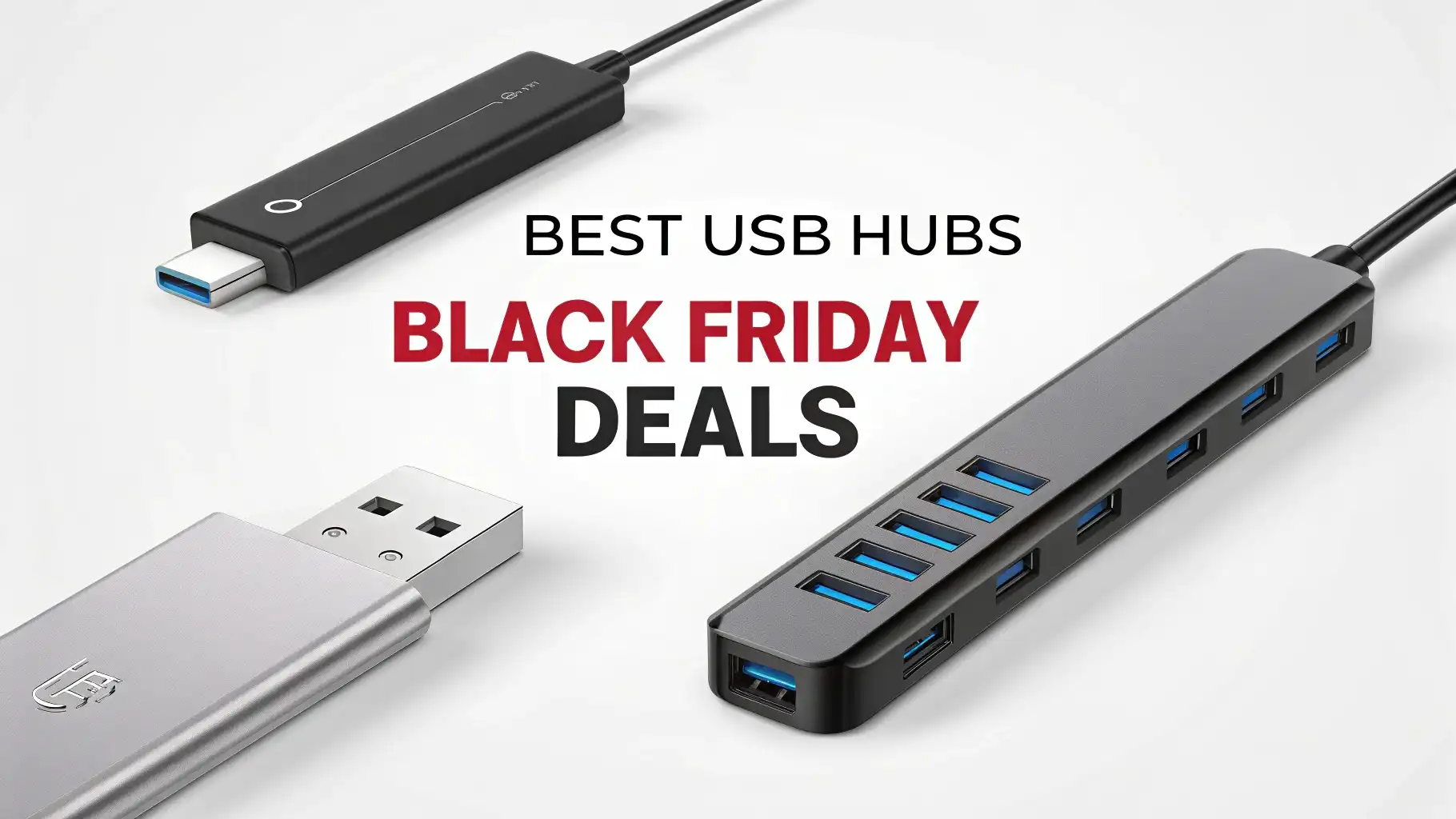
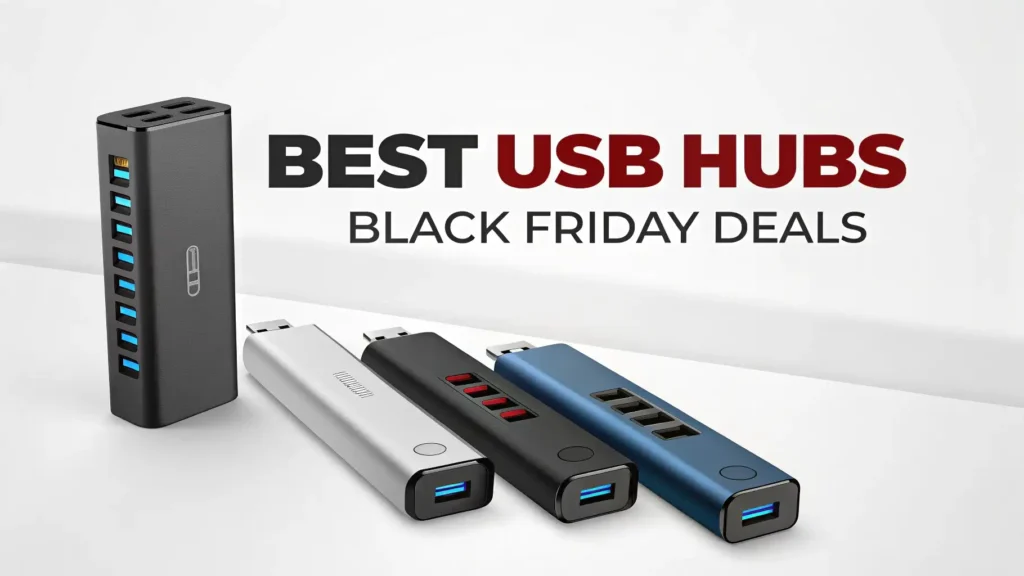
8 Best USB Hubs Black Friday Deals 2026
Black Friday 2026 brings incredible savings on USB hubs that can transform your workspace. Finding the right USB hub can solve your connectivity problems and boost your productivity.
This guide reveals the best USB hub deals available on Amazon this Black Friday season. You will discover options ranging from budget-friendly 4-port hubs to premium 10-port powered stations.
Each product has been carefully selected based on customer ratings, features, and value for money.
Key Takeaways:
- Smart Shopping Starts Here. Black Friday USB hub deals offer savings between 20% to 50% off regular prices. Understanding what features matter most helps you make the right choice.
- Port Count Matters for Your Setup. Basic users need 4 ports while power users benefit from 7 to 10 ports. More ports mean connecting multiple devices simultaneously without constant unplugging.
- Speed Determines Performance. USB 3.0 offers 5 Gbps transfer speeds which is 10 times faster than USB 2.0. This speed difference matters when transferring large files or connecting high-bandwidth devices.
- Powered vs Unpowered Changes Everything. Unpowered hubs work great for keyboards and mice. Powered hubs deliver stable performance for external hard drives, charging devices, and multiple simultaneous connections.
- Compatibility Saves Headaches. USB-C hubs work with modern MacBooks and laptops. USB-A hubs connect to traditional computers and older devices. Some premium models offer both connection types.
- Build Quality Affects Longevity. Aluminum construction provides better heat dissipation and durability. Plastic hubs cost less but may not last as long under heavy use.
Anker USB Hub 4 Ports USB 3.0 Data Splitter
](https://gadgetglimpses.blog/wp-content/plugins/aawp/public/image.php?url=YUhSMGNITTZMeTl0TG0xbFpHbGhMV0Z0WVhwdmJpNWpiMjB2YVcxaFoyVnpMMGt2TkRGeWMyNUNlREZMVEV3dVgxTk1NVFl3WHk1cWNHYz18MTc3NDQ0MjgyMw=)
The Anker 4-Port USB 3.0 Hub stands out as the most popular choice on Amazon with over 134,700 customer reviews. This hub delivers reliable performance at an affordable price point of just $9.99. The compact design makes it perfect for travelers and minimalist setups.
This hub extends your laptop’s connectivity with four additional USB 3.0 ports. The 2-foot cable provides flexibility in placement on your desk. The slim profile easily fits in laptop bags without adding bulk. Anker’s reputation for quality shows in the solid 4.7-star rating.
Pros:
- Extremely affordable at under $10
- Ultra-portable and lightweight design
- Trusted Anker brand with excellent customer support
- Over 134,000 positive customer reviews
- Fast USB 3.0 data transfer speeds
- No drivers required for easy setup
Cons:
- Does not support charging devices
- No individual power switches for ports
- Unpowered design limits high-power device use
- Only four ports may not suit power users
UGREEN USB 3.0 Hub 4 Ports Ultra-Slim Design

The UGREEN USB 3.0 Hub earns Amazon’s Choice badge for good reason. This ultra-slim hub costs only $6.99, making it the most budget-friendly option in this list. The sleek design complements modern laptops and desktops beautifully.
This hub excels at expanding basic connectivity needs. The four USB 3.0 ports handle mice, keyboards, flash drives, and printers with ease. The compact aluminum body feels premium despite the low price. UGREEN includes a built-in cable design that eliminates tangling issues.
Pros:
- Incredibly affordable at under $7
- Amazon’s Choice product with proven reliability
- Ultra-slim profile saves desk space
- Compatible with gaming consoles
- Aluminum construction for durability
- Over 15,600 positive reviews
Cons:
- Limited to four ports only
- No power adapter included
- Cannot charge devices
- May struggle with power-hungry peripherals
Anker USB C Hub 7-in-1 with 4K HDMI

The Anker USB C Hub 7-in-1 transforms a single USB-C port into a complete workstation. This hub includes 4K HDMI output, 85W Power Delivery, and multiple data ports. The $25 price point offers exceptional value for the feature set included.
This hub solves the connectivity challenge faced by MacBook and modern laptop users. The 4K HDMI port supports external monitors at full resolution. Two USB-A ports provide backward compatibility with older devices. The USB-C data port adds extra connectivity options.
Pros:
- Complete 7-in-1 solution for USB-C devices
- 4K HDMI output for external displays
- 85W Power Delivery charges laptops
- SD and microSD card readers included
- Premium aluminum construction
- Excellent compatibility with MacBooks
Cons:
- Higher price than basic hubs
- USB-C connection only
- Some users report occasional heating
- Not suitable for older USB-A only computers
USB Hub 3.0 with 7 Ports and Individual Switches

This 7-Port USB Hub with Individual Switches brings professional-grade features at $9.99. Each port features its own on/off switch with LED indicator. This design saves power and protects devices from power surges.
The seven ports provide ample connectivity for home offices and power users. The individual switches let you control which devices receive power. The LED lights show port status at a glance. The 3.2-foot cable offers flexible placement options.
Pros:
- Seven ports for extensive connectivity
- Individual on/off switches save power
- LED indicators show port status
- Long 3.2-foot cable for flexibility
- Great value at $9.99
- Compatible with gaming consoles
Cons:
- Unpowered design limits some applications
- Plastic construction feels less premium
- No USB-C ports included
- Cannot charge smartphones or tablets
UGREEN Revodok 105 USB C Hub 5-in-1 with 4K HDMI

The UGREEN Revodok 105 delivers premium features at an affordable $11.99 price. This 5-in-1 hub includes 4K HDMI output and 100W Power Delivery. Over 22,100 customers give this hub high ratings for reliability.
This hub excels for MacBook and iPad Pro users who need video output. The 4K HDMI port connects to external monitors and projectors. Three USB-A data ports provide backward compatibility. The 100W Power Delivery keeps your laptop charged during extended work sessions.
Pros:
- Affordable price with premium features
- 4K HDMI output for external displays
- 100W Power Delivery for laptop charging
- Three USB-A ports for peripherals
- Compact and travel-friendly design
- Over 22,000 positive customer reviews
Cons:
- Only five total ports
- No SD card reader
- USB-C connection only
- May not fit laptops with protective cases
SABRENT 10-Port 60W USB 3.0 Hub with Power Switches

The SABRENT 10-Port USB 3.0 Hub represents the ultimate connectivity solution. This powered hub includes a 60W power adapter for stable performance. Individual power switches and LED indicators provide complete port control.
This hub transforms any computer into a connectivity powerhouse. The ten ports handle extensive peripheral setups without performance degradation. The 60W 12V/5A power adapter ensures each port receives adequate power. This design supports power-hungry devices like external hard drives and charging stations.
Pros:
- Ten ports for maximum connectivity
- Powerful 60W adapter included
- Individual switches for each port
- LED indicators show port status
- Stable performance with all ports active
- Excellent build quality
Cons:
- Higher price at $49.99
- Requires wall outlet for power adapter
- Larger footprint than portable hubs
- Overkill for basic users
VIENON USB 3.0 Hub 4-Port USB Splitter

The VIENON 4-Port USB 3.0 Hub offers solid performance at just $5.88. This budget option delivers excellent value for basic connectivity needs. Nearly 19,000 customer reviews confirm its reliability.
This hub handles everyday peripherals with ease. The four USB 3.0 ports support mice, keyboards, flash drives, and printers. The compact design takes minimal desk space. The hub works with Xbox consoles, making it popular among gamers.
The plug-and-play design requires no software installation. The USB 3.0 standard provides fast data transfer speeds. The lightweight construction makes it easy to carry. This hub represents the best choice for users on tight budgets.
Pros:
- Lowest price point at $5.88
- Nearly 19,000 customer reviews
- Xbox and gaming console compatible
- Compact and portable design
- USB 3.0 fast data transfer
- No driver installation needed
Cons:
- No charging capability
- Only four ports available
- Unpowered design limits applications
- Basic plastic construction
- No individual port switches
Acer USB Hub 4 Ports with Type C Power Port

The Acer USB Hub 4 Ports brings a unique feature with its Type C Power Port. This bestselling hub costs $9.99 and includes 10,500 customer ratings. The design balances portability with functionality.
This hub stands out with its dedicated USB-C power port. The four USB 3.0 data ports handle peripherals while the USB-C port provides power input. The 2-foot cable offers placement flexibility. The slim profile fits easily in laptop bags.
Pros:
- Bestseller status indicates popularity
- Dedicated USB-C power port
- Four USB 3.0 data ports
- Affordable at $9.99
- Compact and portable design
- Trusted Acer brand
Cons:
- Power port requires separate power source
- Limited to four data ports
- Some compatibility issues reported
- Plastic construction
Understanding USB Hub Speeds and Standards
USB technology has evolved significantly over the years. USB 2.0 offers 480 Mbps while USB 3.0 jumps to 5 Gbps. This speed difference impacts real-world performance dramatically.
USB 3.0 transfers a 1GB file in approximately 20 seconds. USB 2.0 takes around 3 minutes for the same file. The blue color inside USB 3.0 ports helps identify them quickly. Modern devices benefit most from USB 3.0 speeds.
USB 3.1 and USB 3.2 push speeds even higher. USB 3.1 Gen 2 reaches 10 Gbps transfer rates. USB 3.2 can hit 20 Gbps in optimal conditions. These faster standards cost more but benefit professional users.
Backward compatibility ensures older devices work with newer hubs. A USB 2.0 device plugged into a USB 3.0 hub operates at USB 2.0 speeds. This flexibility makes USB hubs versatile across different device generations.
Powered vs Unpowered USB Hubs Explained
Unpowered hubs draw electricity from your computer’s USB port. These hubs work well for low-power devices like keyboards and mice. The compact design makes them ideal for travel. Unpowered hubs cost less than powered alternatives.
Powered hubs include external power adapters. The additional power supports multiple high-demand devices simultaneously. External hard drives, charging phones, and webcams perform better with powered hubs. The stable power supply prevents connection drops.
Power requirements determine which hub type suits your needs. Adding up device power demands helps make the right choice. Devices drawing more than 500mA need powered hubs. Multiple devices running simultaneously also benefit from dedicated power.
Powered hubs cost more but deliver superior performance. The extra investment pays off for users with extensive peripheral setups. Professional workstations and content creation setups typically require powered solutions.
Choosing the Right Port Count
Four-port hubs suit basic users with minimal peripherals. Students and casual users find four ports sufficient. The compact size makes these hubs highly portable. Four-port models represent the most affordable options.
Seven-port hubs offer middle-ground solutions. Home office users appreciate the extra connectivity. Gaming setups with multiple peripherals benefit from seven ports. The balance between size and functionality appeals to many buyers.
Ten-port hubs serve power users and professionals. Video editors, programmers, and designers need extensive connectivity. Multiple external drives, displays, and input devices require many ports. Desktop setups gain the most from high port counts.
Consider future needs when selecting port count. Adding devices later becomes easier with extra ports. Buying a larger hub initially saves money versus upgrading later. Balance current needs with anticipated growth.
Black Friday Shopping Tips for USB Hubs
Research products before Black Friday arrives. Reading customer reviews reveals real-world performance. Comparing features across models helps identify the best value. Creating a shortlist streamlines decision-making during sales.
Set price alerts on desired products. Many retailers offer early access deals. Lightning deals require quick action. Having payment information ready speeds checkout.
Check return policies before purchasing. Extended holiday return windows provide flexibility. Testing hubs immediately after arrival catches defects. Keeping original packaging simplifies returns if needed.
Bundle deals sometimes offer better value. Purchasing multiple items together can increase savings. Some retailers provide additional discounts for bulk purchases. Calculate total costs including shipping when comparing deals.
What Are the Key Features to Look for in a USB Hub?
Port type determines device compatibility. USB-A ports connect traditional peripherals. USB-C ports work with modern laptops and smartphones. Mixed port hubs offer maximum flexibility.
Data transfer speed affects performance. USB 3.0 minimum ensures adequate speed for most users. Professional work benefits from USB 3.1 or 3.2 speeds. Checking speed specifications prevents bottlenecks.
Build quality impacts durability and heat management. Aluminum construction dissipates heat better than plastic. Metal hubs last longer under heavy use. Premium materials justify higher prices.
Cable length affects placement options. Short cables keep desks tidy. Longer cables enable flexible positioning. Consider your workspace layout when evaluating cable length.
How Do I Know If I Need a Powered USB Hub?
Device power requirements determine hub type needed. Check specifications for each peripheral’s power draw. Devices requiring more than 500mA need powered hubs. External hard drives typically need powered connections.
Multiple simultaneous devices strain unpowered hubs. Running three or more devices at once benefits from dedicated power. Charging devices while transferring data requires powered solutions. Performance issues indicate insufficient power.
Computer USB port output varies by model. Older computers provide less power per port. Laptops often have lower power budgets than desktops. Powered hubs supplement weak computer ports effectively.
Budget considerations factor into the decision. Unpowered hubs cost less upfront. Powered hubs prevent frustration and connection issues. The reliability gained often justifies the extra cost.
Can USB Hubs Damage My Devices?
Quality hubs include protection circuits against power surges. Reputable brands build safety features into their products. Cheap, uncertified hubs pose greater risks. Investing in quality protects expensive peripherals.
Overloading unpowered hubs can cause issues. Drawing too much power may damage the hub or computer port. Following power guidelines prevents problems. Using powered hubs eliminates overload concerns.
Heat generation affects reliability and safety. Quality hubs dissipate heat effectively through proper design. Poor heat management degrades performance over time. Metal construction helps with heat dissipation.
Reading customer reviews reveals potential safety issues. Multiple reports of overheating or failures indicate problems. Established brands offer better quality control. Warranty coverage provides additional protection.
Do USB Hubs Work with Gaming Consoles?
Modern gaming consoles support USB hubs for controller and peripheral connectivity. PS5 and Xbox Series X work with most USB 3.0 hubs. The additional ports help manage controllers, headsets, and charging stations. Gaming setups benefit from organized connectivity.
Console compatibility varies by hub specifications. Powered hubs work more reliably with consoles. Some consoles limit power output per port. Checking console specifications ensures compatibility.
Hub placement affects cable management in entertainment centers. Longer cables provide flexible positioning. Shorter cables keep areas tidy but limit placement options. Consider your entertainment center layout.
Specific gaming accessories may require dedicated connections. High-bandwidth devices like VR headsets need direct console connection. Standard controllers and headsets work fine through hubs. Testing compatibility with your specific accessories helps avoid issues.
FAQs
What is the difference between a USB hub and a docking station?
USB hubs expand port availability for connecting multiple peripherals. Docking stations provide comprehensive connectivity including display outputs, ethernet, and power delivery. Hubs cost less and offer basic expansion. Docking stations serve as complete workstation solutions with premium pricing. Your needs determine which solution fits best.
Can I connect a USB hub to another USB hub?
You can daisy-chain USB hubs but this practice has limitations. The USB specification allows up to five hubs in a chain. Performance degrades with each additional hub. Power delivery becomes unreliable in long chains. Using a single hub with sufficient ports provides better results.
Will a USB hub slow down my devices?
USB hubs share bandwidth among all connected devices. Simultaneous high-bandwidth usage can reduce individual device speeds. USB 3.0 hubs provide 5 Gbps shared across all ports. Normal usage patterns rarely max out available bandwidth. Quality hubs manage bandwidth efficiently.
How many devices can I connect to a USB hub?
The number of devices depends on hub port count and power availability. Four-port hubs support four devices maximum. Ten-port hubs handle ten devices. Powered hubs support more high-demand devices simultaneously. Device power requirements limit practical device count.
Do USB hubs require drivers or software installation?
Most modern USB hubs work with plug-and-play functionality. No driver installation is needed for basic operation. Some specialized hubs with extra features may include optional software. Windows, Mac, and Linux recognize standard hubs automatically. This simplicity makes hubs user-friendly.
Can I use a USB-C hub with a USB-A port?
USB-C hubs require USB-C ports on your computer. Adapters exist but often cause compatibility issues. USB-A hubs work with traditional USB-A ports. Check your computer’s available ports before purchasing. Matching hub type to computer ports ensures proper function.
How long do USB hubs typically last?
Quality USB hubs last three to five years with regular use. Premium brands with solid construction last even longer. Cheap hubs may fail within a year. Build quality directly affects lifespan. Proper care and avoiding overloading extend hub life.
Are USB hubs safe for charging expensive devices?
Reputable USB hubs include safety circuits for charging protection. Quality hubs prevent overcharging and power surges. Cheap, uncertified hubs pose risks to expensive devices. Stick with established brands for charging applications. Reading reviews reveals charging safety experiences.