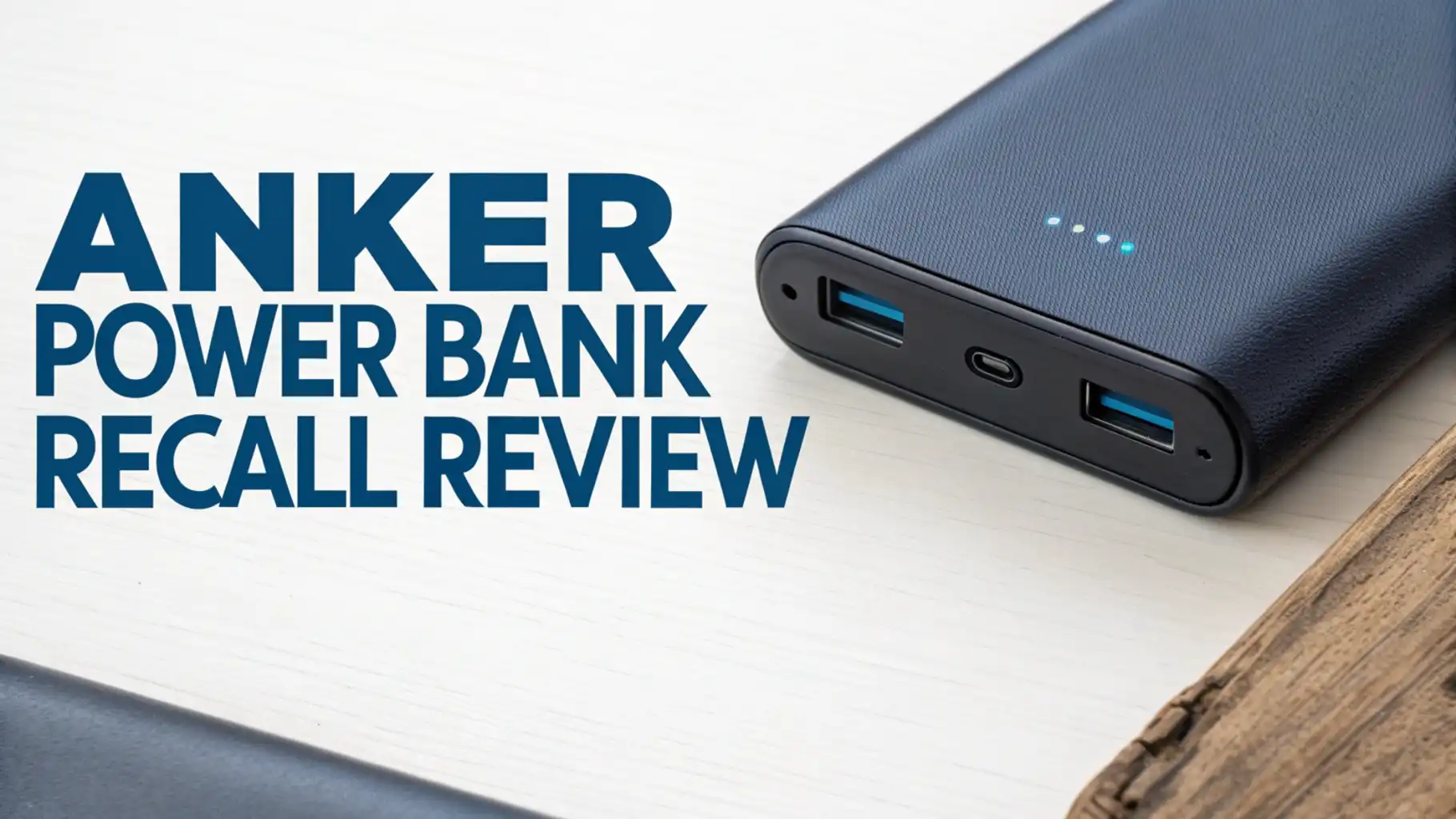
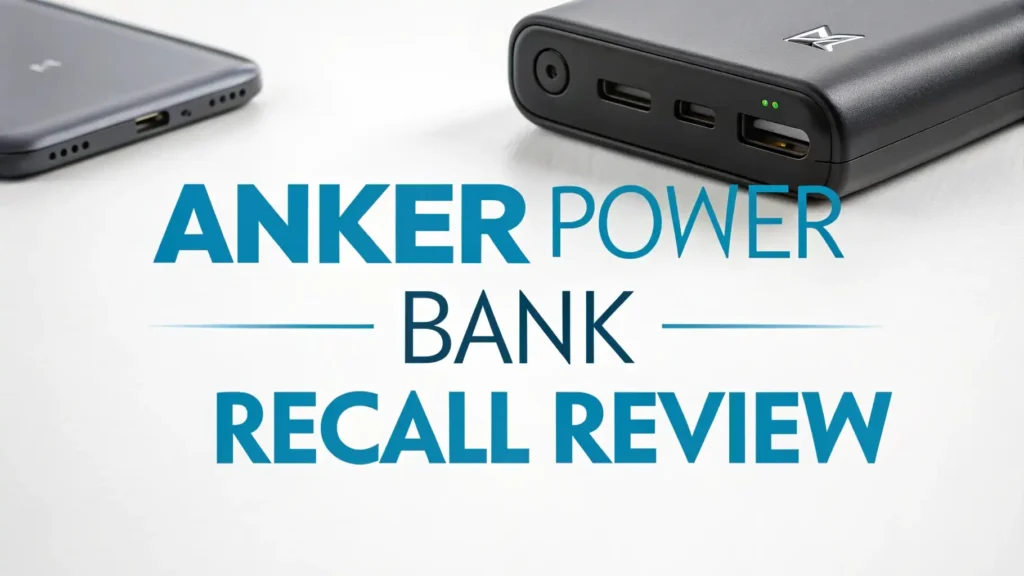
Anker Power Bank Recall Review: Complete Safety Guide
Are you worried about your Anker power bank after hearing about the massive recalls? You’re not alone.
More than one million Anker portable chargers have been pulled from the market due to serious fire hazards.
This comprehensive guide will help you understand the recall situation and discover the best safe alternatives available on Amazon today.
Key Takeaways
- Multiple Anker models recalled: The U.S. Consumer Product Safety Commission issued recalls for models A1642, A1647, A1652, A1257, A1681, A1689, and A1263 between October 2024 and June 2026
- Serious safety hazard: Affected power banks have lithium-ion batteries that can overheat, potentially causing fire and burn injuries to users
- Over one million units affected: More than 1.2 million Anker power banks sold in the United States are part of this voluntary recall program
- Free replacement available: Anker offers free replacement units for all affected models through their official recall website
- Safe alternatives exist: Several competing brands offer reliable power banks with excellent safety records and similar or better features
- Check your model immediately: Stop using your Anker power bank and verify the model number on the device label or packaging before continuing use

Understanding the Anker Power Bank Recall
The Anker power bank recall represents one of the largest portable charger safety issues in recent years. Starting in October 2024, Anker Innovations began pulling millions of units from circulation after discovering manufacturing defects in their lithium-ion batteries.
The affected batteries can overheat during normal charging or discharging cycles. This overheating creates multiple dangers including melting of plastic components, smoke generation, and actual fire ignition.
Several incidents have been reported to the Consumer Product Safety Commission, though fortunately no major injuries have occurred yet.
The recall expanded multiple times throughout 2024 and into 2026 as Anker identified additional affected model numbers.
The company has been working with regulatory agencies worldwide, including recalls in Australia, Singapore, and the United Kingdom. This global scope shows the seriousness of the manufacturing defect.
Which Anker Models Are Recalled
You need to check your Anker power bank right now if you own any of these specific models. The model number appears on a label on the device itself and on the original packaging.
Recalled Models Include:
The Anker 334 MagGo Battery (PowerCore 10K) with model number A1642 was the first to be recalled. This popular magnetic wireless charger sold extensively to iPhone users who wanted convenient MagSafe charging on the go.
Model A1647 is the Anker Power Bank 20K with 22.5W output. This high capacity charger was marketed for travelers and heavy smartphone users who needed multiple charge cycles per day.
The A1652 model represents the 7.5W MagSafe compatible version. Like the A1642, this magnetic power bank appealed to iPhone 12 and newer users wanting wireless charging convenience.
Model A1257 is the Anker Power Bank 10K with 22.5W fast charging capability. This compact model was popular for daily carry due to its slim profile and adequate capacity.
A1681 and A1689 are the Zolo Power Bank models with 30W output and built-in cables. These newer models feature integrated charging cables for added convenience, making them popular among users who dislike carrying separate cables.
The A1263 PowerCore 10000 represents the standard 10,000mAh capacity power bank that has been a bestseller for years. This widespread model means many consumers are affected by the recall.
If you own any of these models, stop using them immediately and visit the official Anker recall website to request your free replacement unit.
Anker PowerCore 10K Portable Charger
The Anker PowerCore 10K represents the company’s most popular capacity tier for portable charging. This 10,000mAh battery pack provides approximately 1.5 to 2 full charges for modern smartphones, making it ideal for daily use or short trips.
This particular model features PowerIQ charging technology that automatically detects connected devices and delivers optimized charging speeds. The 5V/3A output provides 15W maximum power, which is sufficient for standard smartphone charging but not quite fast charging territory.
The compact design measures just slightly larger than a credit card and weighs only 6.5 ounces. This makes it extremely portable and easy to slip into any pocket or bag. The textured plastic exterior provides good grip and resists scratches during daily carry.
Build quality feels solid with no creaking or flex in the housing. The single USB-C port serves double duty as both input for recharging the power bank and output for charging devices. This simplifies cable management since you only need one USB-C cable for everything.
Anker 20K Travel Power Bank with Built-in Cable

This 20,000mAh power bank takes portable charging to the next level with its impressive 87W maximum output distributed across three ports. The integrated USB-C cable eliminates the frustration of forgetting or losing your charging cable, making this an excellent travel companion.
The built-in cable retracts into the body when not in use, keeping everything neat and protected. This integrated design means one less thing to pack and one less thing to break or misplace during your travels. The cable extends to a comfortable length for use while charging.
Triple-port charging allows you to power your laptop, phone, and tablet simultaneously. The three ports include the built-in USB-C cable plus two additional USB-C ports.
This versatility makes it suitable for powering MacBooks, iPads, iPhones, Samsung devices, Nintendo Switch, and virtually any other USB-C powered gadget.
At 44.99, this represents excellent value for the features and capacity provided. The 4.6-star rating from over 4,500 reviews indicates strong customer satisfaction. Users particularly praise the built-in cable convenience and fast charging capabilities.
Top 3 Alternatives for Anker Power Banks


INIU Ultra Slim 10000mAh Power Bank
The INIU portable charger stands out as the top alternative to Anker’s recalled models. This ultra-slim design measures just 0.5 inches thick, making it one of the thinnest 10,000mAh power banks available on Amazon today.
45W Power Delivery charging capability far exceeds the basic Anker models. This fast charging technology can power up an iPhone from 0 to 50% in approximately 30 minutes. The USB-C port handles both input and output, supporting bidirectional fast charging.
The device uses intelligent temperature control to prevent overheating during charging cycles. This safety feature directly addresses the type of problem that caused the Anker recall. INIU incorporates multiple protection systems including over-current protection, over-voltage protection, and short-circuit protection.
Build quality impresses with premium materials and excellent fit and finish. The slim profile doesn’t sacrifice durability, with a sturdy housing that protects internal components from drops and impacts. The smooth exterior resists fingerprints and scratches better than textured alternatives.
Charmast 10000mAh with Built-in Cables
This Charmast power bank solves the cable problem completely by including built-in cables for multiple device types. The integrated cables cover USB-C, Lightning for iPhones, and micro-USB, meaning you can charge virtually any device without carrying separate cables.
Six total outputs provide incredible versatility. Beyond the three built-in cables, you get three additional ports including USB-C and USB-A options. This means you can charge six devices simultaneously, making it perfect for families or users with multiple gadgets.
The three input options allow flexible recharging. You can use micro-USB, USB-C, or Lightning to recharge the power bank itself. This flexibility means you can use whatever charging cable happens to be available rather than needing a specific one.
Anker 25000mAh Laptop Power Bank
For users who need maximum power capacity, this 25,000mAh laptop power bank delivers impressive performance. The high capacity can charge laptops, tablets, and phones multiple times before needing a recharge itself.
Triple 100W USB-C ports provide enormous charging flexibility. Each port can deliver up to 100W individually, or you can charge three devices simultaneously with power distribution across ports. This makes it suitable for power users with multiple high-drain devices.
Built-in retractable cables eliminate the need to carry separate charging cables. The cables extend when needed and retract flush with the body when not in use. This integrated design reduces cable clutter and prevents damage to connectors.
Flight-approved capacity falls just below the 100Wh airline limit, making it legal to carry on commercial flights. This is crucial for travelers who rely on portable power during long flights or layovers. Always verify your specific airline’s policies, but this capacity generally meets regulations.
Safety Features to Look for in Power Banks
When shopping for a power bank after the Anker recall, safety should be your top priority. Modern power banks should incorporate multiple protection systems to prevent overheating, overcharging, and short circuits.
Temperature monitoring represents the most critical safety feature. Quality power banks include sensors that detect when internal components are getting too hot. When temperature exceeds safe limits, the charging process automatically slows or stops until cooling occurs.
Over-current protection prevents too much electrical current from flowing through the charging circuits. This protects both the power bank itself and your connected devices from damage caused by current spikes or surges.
Short-circuit protection immediately cuts power if the system detects an electrical short. This prevents dangerous situations where shorts could cause overheating or sparks that might ignite the battery.
Capacity Guide: How Much Power Do You Need
Choosing the right power bank capacity depends on your typical usage patterns and charging needs. Understanding capacity helps you avoid buying too little or paying for excess capacity you’ll never use.
10,000mAh capacity provides approximately 1.5 to 2 full charges for modern smartphones. This works well for daily use, short trips, or as emergency backup power. The compact size makes 10,000mAh models easy to carry in pockets or small bags.
A 20,000mAh power bank delivers roughly 3 to 4 complete smartphone charges. This capacity suits weekend trips, long travel days, or users who rely heavily on their devices throughout the day. The moderate size remains fairly portable while offering substantial power.
Fast Charging Technology Explained
Fast charging technology has revolutionized portable power by dramatically reducing charging times. Understanding these technologies helps you choose power banks that work optimally with your devices.
Power Delivery (PD) represents the universal fast charging standard for USB-C devices. PD can deliver up to 100W of power, enabling rapid charging for phones, tablets, and even laptops. Most newer devices support PD charging.
Quick Charge (QC) technology from Qualcomm provides fast charging for Android devices with Qualcomm processors. The latest QC 4.0 and 5.0 standards offer impressive charging speeds while maintaining battery health through intelligent voltage management.
PowerIQ is Anker’s proprietary technology that automatically detects connected devices and delivers optimized charging. While effective, it’s not as universally fast as PD or QC standards. Most modern power banks support both proprietary and standard fast charging.
Portable Power for Different Devices
Different devices have varying power requirements and charging needs. Selecting the right power bank depends heavily on what you plan to charge.
Smartphones typically need 10W to 30W for fast charging. A 10,000mAh power bank easily handles multiple phone charges. Modern iPhones charge optimally at 20W to 30W, while flagship Android phones can accept 30W to 45W.
Tablets including iPads consume more power than phones. A tablet charge requires 18W to 30W for reasonable speed. The larger batteries in tablets mean a 10,000mAh power bank might only provide one complete charge.
Laptops demand significantly more power. Ultrabooks typically charge at 45W to 65W, while performance laptops may require 65W to 100W. Only higher capacity power banks with PD support can effectively charge laptops.
Best Power Banks for Travel
Travel scenarios create unique power bank requirements including portability, capacity, airline regulations, and charging versatility. Selecting the right travel power bank balances these competing demands.
Airline regulations limit power banks to under 100Wh capacity for carry-on luggage. This roughly translates to 27,000mAh at 3.7V nominal voltage. Power banks cannot go in checked baggage due to fire risk. Always verify current regulations before flying.
Portability matters more when traveling than during daily use. Even a 20,000mAh power bank adds noticeable weight and bulk to carry-on bags. Consider whether you need maximum capacity or prefer lighter weight.
Multiple device charging becomes crucial during travel when you’re carrying phones, tablets, cameras, and other gadgets. Power banks with multiple ports let you charge several devices simultaneously, maximizing your limited charging opportunities.
Magnetic Wireless Power Banks for iPhone
Magnetic wireless power banks provide convenient charging for iPhone 12 and newer models with MagSafe compatibility. These specialized chargers align perfectly and attach securely to your phone.
MagSafe charging delivers up to 15W wirelessly to compatible iPhones. The magnetic alignment ensures optimal charging position without the guesswork of traditional wireless charging pads. You can use your phone normally while charging.
Attachment strength varies between models. Quality magnetic power banks hold firmly even when the phone is upside down or shaken. Cheaper alternatives may detach easily, defeating the convenience purpose.
Additional wired ports add versatility to magnetic power banks. Many models include USB-C and USB-A ports for charging other devices or for faster wired charging of the iPhone itself. This flexibility maximizes the value of the power bank.
Power Banks with Built-in Cables
Power banks with integrated cables solve one of the most frustrating aspects of portable charging: forgetting or losing your cables. These all-in-one solutions provide true grab-and-go convenience.
Cable types vary by model. Basic versions include just USB-C or Lightning. Premium models integrate multiple cable types including USB-C, Lightning, and micro-USB, covering virtually every device you might own.
Retractable mechanisms keep cables neat when not in use. The cables extend when needed and retract into the body with a button press or gentle tug. This protects the cables and connectors from damage.
Cable durability concerns some users since damaged built-in cables can’t be replaced. Quality models use reinforced cables with sturdy strain relief at connection points. Still, these cables may eventually fail after thousands of charge cycles.
Understanding Power Bank Lifespan
Power banks don’t last forever. Understanding their lifespan helps you maximize value and know when replacement is necessary. Proper care extends usable life significantly.
Charge cycles determine battery longevity more than calendar age. A charge cycle means discharging and recharging the power bank once. Quality lithium-ion batteries typically handle 300 to 500 full charge cycles before capacity degrades noticeably.
Capacity degradation happens gradually. After 300 cycles, a power bank might retain 80% of its original capacity. After 500 cycles, capacity might drop to 60-70%. The power bank still works but holds less charge than when new.
Storage conditions affect lifespan significantly. Store power banks at 40-60% charge in cool, dry locations. Full or empty storage accelerates degradation. Extreme temperatures damage batteries faster than normal use.
How to Check Your Anker Model Number
If you own an Anker power bank, checking the model number takes just seconds but could prevent a dangerous situation. Here’s exactly how to identify your specific model.
Physical device inspection provides the most reliable information. Look for a label on the power bank body listing specifications and certifications. The model number typically appears near the beginning, formatted as a letter followed by four digits like A1642.
The original packaging includes model information on the box exterior. Check near the barcode where specifications are listed. The model number appears prominently to help retailers and consumers identify the specific product.
Purchase history on Amazon or other retailers shows the model number in your order details. Log into your account and view past orders. Click on the Anker power bank purchase to see complete product information including the exact model.
Getting Your Anker Recall Replacement
If your Anker power bank is affected by the recall, the company provides free replacement units. The process is straightforward but requires a few steps to complete.
Visit the official recall website at Anker’s domain. Navigate to the product recalls section and find your specific model number. Click through to the dedicated recall page for your model to access the replacement process.
Registration requires providing proof of purchase or photos of your affected power bank. Take clear pictures showing the model number label and the overall device condition. Anker may also request the serial number for verification purposes.
Shipping your recalled unit back to Anker is typically required. The company provides a prepaid shipping label so you don’t incur costs. Pack the power bank securely according to the provided instructions. Never ship lithium batteries in checked mail, only approved ground shipping.
Alternative Brands Worth Considering
While Anker built a strong reputation before the recalls, several other brands offer equally good or better portable charging solutions. Exploring alternatives provides options with proven safety records.
RAVPower competes directly with Anker in features and pricing. The brand offers similar capacities, fast charging support, and build quality. Many tech reviewers consider RAVPower comparable to Anker in reliability. Customer reviews average similarly high ratings.
Aukey provides budget-friendly options without significant quality compromises. Their power banks typically cost 10-20% less than equivalent Anker models while delivering similar performance. The brand maintains good customer support and warranty service.
INIU has emerged as a top alternative with innovative designs and competitive pricing. Their ultra-slim models offer exceptional portability. Customer reviews are overwhelmingly positive with over 70,000 reviews averaging 4.5+ stars on many models.
Eco-Friendly Aspects of Power Banks
Environmental considerations increasingly influence purchasing decisions. Understanding the eco-friendly aspects of power banks helps you make responsible choices.
Reusable charging reduces waste compared to disposable batteries. A single power bank replaces hundreds or thousands of disposable batteries over its lifetime. This dramatically reduces the environmental impact of keeping devices powered.
Battery chemistry impacts environmental friendliness. Lithium-ion batteries contain materials that require careful mining and processing. However, they’re more efficient and last longer than older battery technologies, ultimately reducing total environmental impact.
FAQs
What Is the Anker Recall About?
The massive Anker recall involves over one million portable power banks sold between 2024 and 2026. The recall stems from a manufacturing defect in the lithium-ion batteries used in multiple popular Anker models. What makes this recall particularly concerning is the widespread nature of the problem and the serious safety risks involved.
Are Anker Power Banks Still Safe to Buy?
Current Anker power banks not affected by the recall remain safe to purchase and use. The recall specifically targets certain model numbers manufactured during particular time periods. Anker continues selling numerous other models that don’t have the battery defect.
How Do I Know If My Anker Is Recalled?
Checking if your Anker power bank is part of the recall takes just a minute. Locate the model number on the device label, which typically appears on the back or bottom of the power bank. The model number follows the format of a letter A followed by four digits.
What Should I Do With My Recalled Anker?
If you discover your Anker power bank is recalled, take immediate action to protect yourself and others. First, stop using the device right away and disconnect it from any charging sources. Store it in a safe location away from flammable materials while you complete the replacement process.