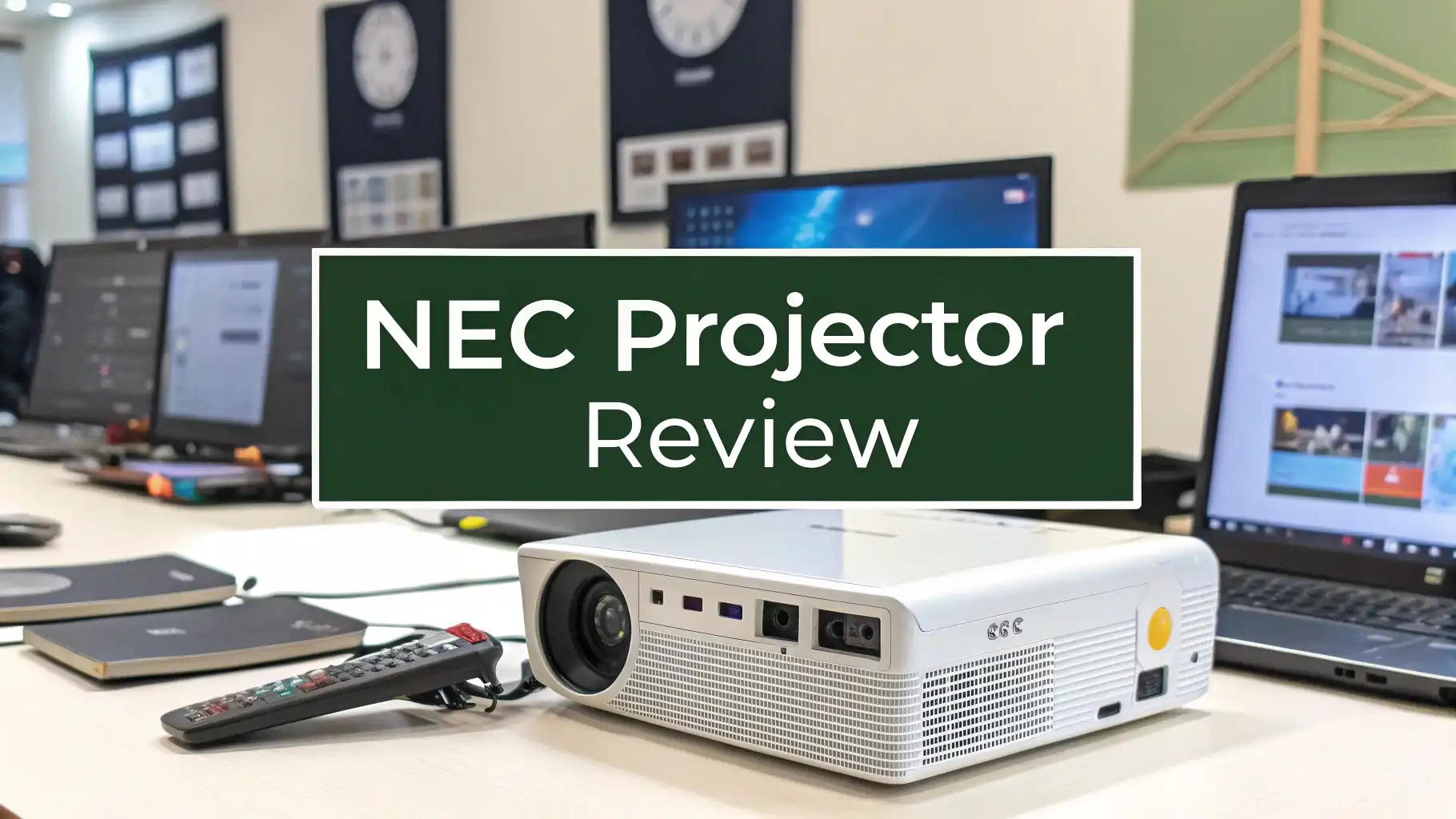
NEC Projector Review: Top Professional Models In 2026
Shopping for a reliable projector can feel overwhelming. You want bright images, sharp clarity, and solid build quality. NEC projectors deliver all of that and more.
These projectors have earned their reputation through years of innovation and customer satisfaction.
This review explores the best NEC projectors currently available on Amazon. You will discover models with different brightness levels, resolutions, and price points. Each projector brings unique advantages to the table.
Key Takeaways
- Understanding NEC Projector Value: NEC projectors offer exceptional reliability with industry leading warranties, often providing 5 years or 20,000 hours of usage coverage. This makes them ideal for professional environments where downtime costs money.
- 3LCD Technology Benefits: Most NEC projectors use 3LCD imaging technology that delivers superior color accuracy, vibrant images, and eliminates the rainbow effect common in single chip DLP projectors. This technology ensures consistent image quality across all brightness settings.
- Laser vs Lamp Models: Laser projectors require zero lamp replacements and minimal maintenance, saving significant costs over time. Traditional lamp based models cost less upfront but need periodic lamp replacements every 3000 to 6000 hours.
- Brightness Matters: For well lit rooms, conference spaces, or classrooms with windows, look for projectors with at least 3000 to 4000 lumens. Higher brightness ensures your content remains visible even with ambient light present.
- Resolution Considerations: WXGA resolution works well for business presentations and standard content. For detailed graphics, video content, or future proofing your investment, consider WUXGA or 4K capable models that display sharper images.
- Installation Flexibility: NEC projectors often include lens shift capabilities and extensive zoom ranges, making installation easier without compromising image quality. This saves time during setup and allows flexible room configurations.

NEC NP P401W Professional Installation Projector
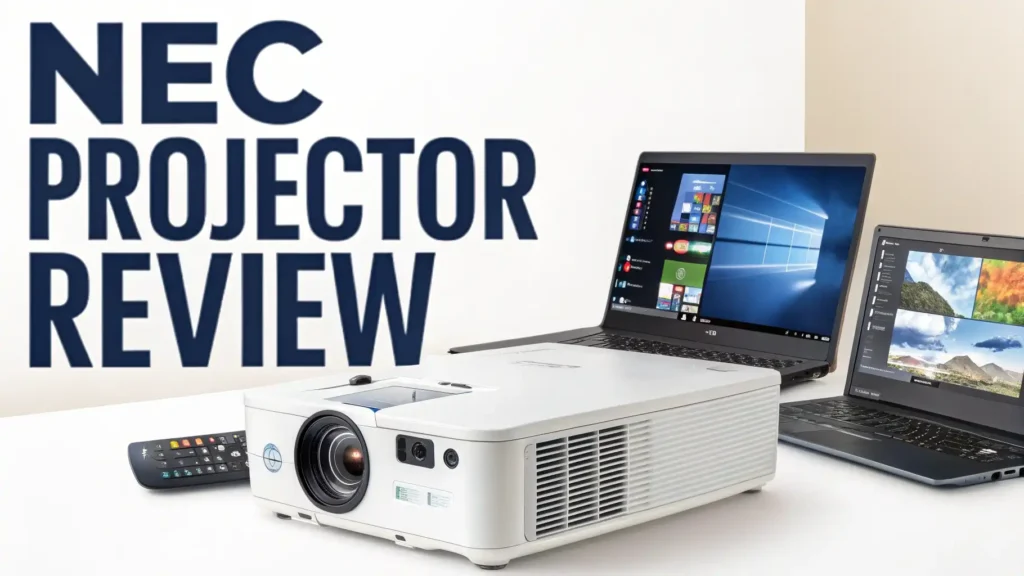
The NEC NP P401W stands out as a versatile professional projector designed for medium to large spaces. This model delivers 4000 lumens of brightness with WXGA resolution at 1280×800 pixels. The projector uses 3LCD technology to produce accurate colors and eliminate the distracting rainbow effect.
This projector includes manual lens shift that provides flexibility during installation. You can adjust the image position without moving the entire projector. The 1.7x optical zoom gives you placement options while maintaining image sharpness. The contrast ratio of 4000:1 ensures deep blacks and bright whites in your presentations.
Business professionals appreciate the comprehensive connectivity options. The P401W features dual HDMI inputs, VGA ports, and network connectivity. You can control the projector remotely through a web browser. The closed captioning support makes this model accessible for hearing impaired viewers.
NEC NP V332X Portable Business Projector

The NEC NP V332X brings exceptional portability to business and education environments. This DLP projector weighs just a few pounds, making transport between locations effortless. The compact design fits easily into a briefcase or backpack without taking up excessive space.
Brightness reaches 3300 lumens, providing clear images even in rooms with ambient light. The native XGA resolution of 1024×768 pixels works perfectly for standard business presentations, spreadsheets, and documents. The high contrast ratio of 10,000:1 produces sharp text and vibrant graphics that capture audience attention.
This projector includes dual HDMI inputs for modern connectivity needs. You can switch between two devices without unplugging cables. The quick start feature gets your presentation running in seconds. The auto power off function conserves energy when the projector sits idle for extended periods.
3D support adds another dimension to your presentations when paired with compatible content and glasses. The built in 8 watt speaker provides sufficient audio for small to medium sized rooms. For larger venues, the audio output jack connects to external sound systems easily.
Understanding NEC 3LCD Technology
NEC primarily uses 3LCD projection technology in their professional projector lineup. This technology splits white light into red, green, and blue components using dichroic mirrors. Each color passes through its own LCD panel before recombining to create the final image.
Color accuracy stands out as a major advantage of 3LCD technology. All three primary colors display simultaneously, eliminating color breakup and rainbow artifacts. This matters especially when viewers move their eyes quickly across the screen or during fast moving content. The technology produces natural skin tones and vibrant colors that look lifelike.
3LCD projectors deliver higher color brightness compared to competing technologies at similar lumen ratings. This means reds, blues, and greens appear just as bright as whites. Many single chip DLP projectors measure white brightness but show dimmer colors in actual use. With 3LCD, you get consistent brightness across all colors.
Top 3 Alternatives for NEC Projectors


Brightness Levels Explained for Different Environments
Brightness measurement uses lumens as the standard unit. Higher lumen counts mean brighter images that remain visible in well lit conditions. Understanding your environment helps determine the appropriate brightness level for your specific needs.
For home theaters with controlled lighting, 1500 to 2500 lumens provides excellent image quality. Dark rooms allow lower brightness projectors to shine. You achieve deeper blacks and better contrast ratios in these conditions. The cinematic experience improves dramatically when ambient light stays minimal.
Classrooms and meeting rooms require 3000 to 4000 lumens for acceptable visibility. These spaces often have windows, overhead lights, or both. Higher brightness ensures your content remains clear and readable. Students and colleagues stay engaged when they can actually see the projected information clearly.
Large auditoriums, gymnasiums, and outdoor venues need 5000 lumens or higher. These challenging environments demand maximum brightness to compete with ambient light. NEC offers several high brightness models specifically designed for these demanding applications. The investment pays off through improved visibility and audience engagement.
Resolution Options from WXGA to 4K
Resolution determines image sharpness and the amount of detail visible in projected content. Higher resolutions display more pixels, resulting in crisper images and smoother text. Understanding resolution standards helps you choose the right projector for your content type.
WXGA resolution at 1280×800 pixels serves business presentations exceptionally well. This widescreen format matches modern laptop displays and delivers sharp text for spreadsheets, documents, and slides. The 16:10 aspect ratio provides extra vertical space compared to standard widescreen formats. Most NEC portable projectors offer WXGA as their native resolution.
XGA resolution at 1024×768 pixels represents the older 4:3 aspect ratio. This standard works perfectly for classic PowerPoint presentations and legacy content. While superseded by widescreen formats, XGA projectors cost less and meet basic presentation needs effectively. Many educational institutions continue using XGA projectors successfully.
WUXGA resolution at 1920×1200 pixels steps up image quality significantly. This resolution displays Full HD content beautifully while providing extra vertical pixels for productivity applications. Graphics designers, engineers, and architects appreciate the added detail when presenting technical drawings or detailed photographs. The investment makes sense for professional applications requiring maximum clarity.
Portable vs Installation Projector Models
Portable projectors prioritize convenience and easy transport between locations. These models typically weigh less than 10 pounds and include carrying handles or cases. Teachers, traveling consultants, and sales professionals benefit from projectors they can move easily. Setup time remains minimal thanks to automatic features and simplified controls.
Installation projectors focus on performance and permanent mounting capabilities. These heavier units include advanced lens options, higher brightness levels, and comprehensive connectivity. Theaters, conference rooms, and auditoriums use installation projectors for their superior image quality and reliability. The added weight comes from better cooling systems and more robust construction.
Lens flexibility separates installation models from portable options. Installation projectors often feature motorized lens shift, extensive zoom ranges, and interchangeable lens systems. These capabilities allow perfect image placement without compromising quality. Portable models typically include limited manual adjustments that work fine for temporary setups.
Network features appear more commonly in installation projectors. Remote monitoring, centralized control, and email alerts help facility managers maintain multiple projectors efficiently. Large organizations appreciate the ability to monitor lamp hours, filter status, and error conditions across their entire projector fleet from a central location.
Laser Light Sources vs Traditional Lamps
Traditional lamp based projectors use high pressure mercury or metal halide lamps to generate light. These lamps produce intense brightness but have limited lifespans ranging from 3000 to 6000 hours. Replacement costs vary from $150 to $500 depending on the projector model. You must factor lamp replacements into your total cost of ownership calculations.
Laser light sources represent newer technology with significant advantages. Laser projectors operate for 20,000 hours or more without lamp replacements. This longevity eliminates maintenance windows and reduces total ownership costs dramatically. The initial purchase price runs higher but the long term savings add up quickly.
Color accuracy improves with laser technology. Lasers produce pure colors with wider color gamuts than traditional lamps. You see more vibrant reds, deeper blues, and richer greens. The consistent color output throughout the laser’s life means your images look the same on day one and day 5000.
Instant on functionality gives laser projectors an operational advantage. Traditional lamps require warm up periods before reaching full brightness and cool down periods before you can move them safely. Laser projectors reach full brightness immediately and can be powered off instantly without damage. This convenience matters in dynamic presentation environments.
Connectivity Options for Modern Workflows
HDMI inputs serve as the standard connection for modern devices. Look for projectors with at least two HDMI ports to switch between sources easily. HDMI 2.0 support enables 4K content at 60Hz for smooth motion. Earlier HDMI versions limit 4K to 30Hz, which appears choppy during video playback.
VGA connections remain relevant for older computers and legacy equipment. Many organizations maintain older devices that lack HDMI outputs. Dual VGA inputs provide flexibility when supporting diverse hardware. The analog VGA signal works reliably for business presentations even though digital connections offer superior quality.
USB ports enable multiple functions on NEC projectors. USB A ports support flash drive presentations without connecting a computer. USB B ports turn the projector into a display that receives video and control signals through a single USB cable from your laptop. This simplified connectivity reduces cable clutter significantly.
Cooling Systems and Noise Levels
Cooling design directly impacts projector longevity and viewer comfort. High brightness projectors generate substantial heat that must be dissipated efficiently. NEC engineers design cooling systems that balance thermal management with acceptable noise levels. Understanding these specifications helps you choose projectors appropriate for your environment.
Decibel ratings indicate operational noise levels. Measurements below 30dB qualify as whisper quiet, suitable for small conference rooms and executive presentations. Ratings between 30dB and 35dB work well for classrooms and medium sized meeting rooms. Above 35dB, projector noise becomes noticeable and potentially distracting in quiet environments.
Eco mode reduces fan speed along with lamp brightness. The lower power consumption generates less heat, requiring less aggressive cooling. You gain quieter operation and extended lamp life at the expense of some brightness. This trade off makes perfect sense in darker rooms where maximum brightness proves unnecessary.
Warranty Coverage and Support Services
NEC stands behind their projectors with comprehensive warranty programs that exceed industry standards. Most professional models include 3 to 5 year warranties covering parts and labor. This extended coverage demonstrates confidence in product quality and provides peace of mind for your investment.
Advanced replacement programs minimize downtime for critical installations. When a covered projector fails, NEC ships a replacement unit before you return the defective one. Your presentations continue with minimal interruption. This service level matters tremendously for mission critical applications where projector failure disrupts operations.
Lamp coverage varies by model and warranty tier. Some warranties exclude lamps entirely while premium programs include one or two lamp replacements during the coverage period. Read warranty terms carefully to understand exactly what receives coverage. Lamp costs represent significant expenses over projector lifespans.
Choosing the Right NEC Projector for Your Needs
Start by assessing your environment honestly and thoroughly. Measure the room dimensions, note ambient light conditions, and determine typical audience sizes. Ceiling height affects mounting options and lens requirements. Window locations influence brightness needs and screen placement possibilities.
Define your content types clearly. Business presentations need different specifications than video playback or gaming. Data heavy presentations emphasize text sharpness and color accuracy over video performance. Home theater applications prioritize contrast ratios and color depth. Educational settings value reliability and ease of use above cutting edge features.
Budget considerations extend beyond purchase price. Factor in lamp replacements, filter maintenance, and electricity costs over your intended ownership period. A more expensive laser projector may cost less overall than a cheaper lamp based model when accounting for consumables and maintenance.
Installation Tips and Best Practices
Screen selection impacts image quality as much as projector choice. Match screen size to projector specifications and viewing distance. Gain specifications determine how efficiently screens reflect light back to viewers. Higher gain screens work well in bright rooms but narrow viewing angles. Matte white screens provide wider viewing angles with lower gain.
Throw distance calculations ensure proper projector placement. NEC provides throw distance calculators on their website for all projector models. Input your desired screen size to determine the required distance between projector and screen. Zoom lenses provide some placement flexibility but cannot overcome fundamental optical limitations.
Mounting height affects image geometry and viewer comfort. Position projectors so the center of the lens aligns approximately with the top third of your screen. Lens shift capabilities allow vertical adjustment without introducing keystone distortion. This feature proves invaluable when ceiling height or mounting options limit projector placement.
Cable management separates professional installations from amateur attempts. Conceal cables in walls, ceilings, or cable management systems whenever possible. Label both ends of every cable for future troubleshooting. Leave service loops at projector locations to accommodate maintenance and replacement procedures.
FAQs
How much do NEC projectors typically cost?
NEC projector prices vary widely based on specifications and features. Entry level portable models start around $600 to $1000 for units with 3000 to 4000 lumens and WXGA resolution. These projectors work well for small classrooms, meeting rooms, and basic presentation needs.
Do NEC projectors work well for home theaters?
NEC projectors excel in business and education applications but offer limited home theater specific models. The company focuses primarily on professional markets rather than consumer entertainment. Home theater enthusiasts typically choose brands like Sony, Epson, BenQ, or JVC that specialize in cinema focused features.
Are NEC projectors compatible with Mac computers?
All NEC projectors work perfectly with Mac computers through standard connection methods. Modern MacBooks and Mac desktops support video output via HDMI, USB C, or Thunderbolt ports. Simple adapter cables connect these outputs to projector HDMI or VGA inputs without compatibility concerns.
How long do NEC projector lamps last?
Lamp lifespan varies by projector model and usage patterns. Traditional high pressure lamps typically last 3000 to 5000 hours in standard brightness mode. This translates to approximately 3 to 5 years of typical business use at 3 hours daily operation.