WINIX A231 Air Purifier Review: Clean Air in Small Spaces
Breathing clean air matters for your health. Your home should be a safe space. The WINIX A231 Air Purifier promises to deliver powerful air cleaning without emptying your wallet.
This compact device combines advanced filtration with smart features. It targets pet dander, dust, smoke, and allergens in rooms up to 1,110 square feet.
Many people struggle with poor indoor air quality. Allergies flare up. Asthma symptoms worsen. Pet owners deal with constant dander.
Key Takeaways
- Powerful CADR Performance: The WINIX A231 delivers an impressive CADR of 147 CFM, making it faster than many competitors in its price range at clearing PM1 particles from test rooms in just 40 minutes.
- Four-Stage Filtration System: Features a 360-degree all-in-one filter that includes a pre-filter, True HEPA H13 filter, activated carbon filter, and PlasmaWave technology that captures 99.97% of airborne particles as small as 0.3 microns.
- Budget-Friendly Operation: With annual filter costs around $50 for genuine filters or just $15 for generic options, plus low energy consumption adding only $69.55 yearly to electricity bills, this purifier remains affordable long-term.
- Smart Auto Mode: Built-in air quality sensor monitors your room and automatically adjusts fan speed when it detects pollutants, with a color-coded LED ring showing current air quality status.
- Compact Design: Measuring just 9.5 x 9.5 x 14.6 inches and weighing 7.1 pounds, this lightweight device fits easily on side tables, desks, or bedroom corners without taking up valuable floor space.

WINIX A231 Air Purifier for Bedroom
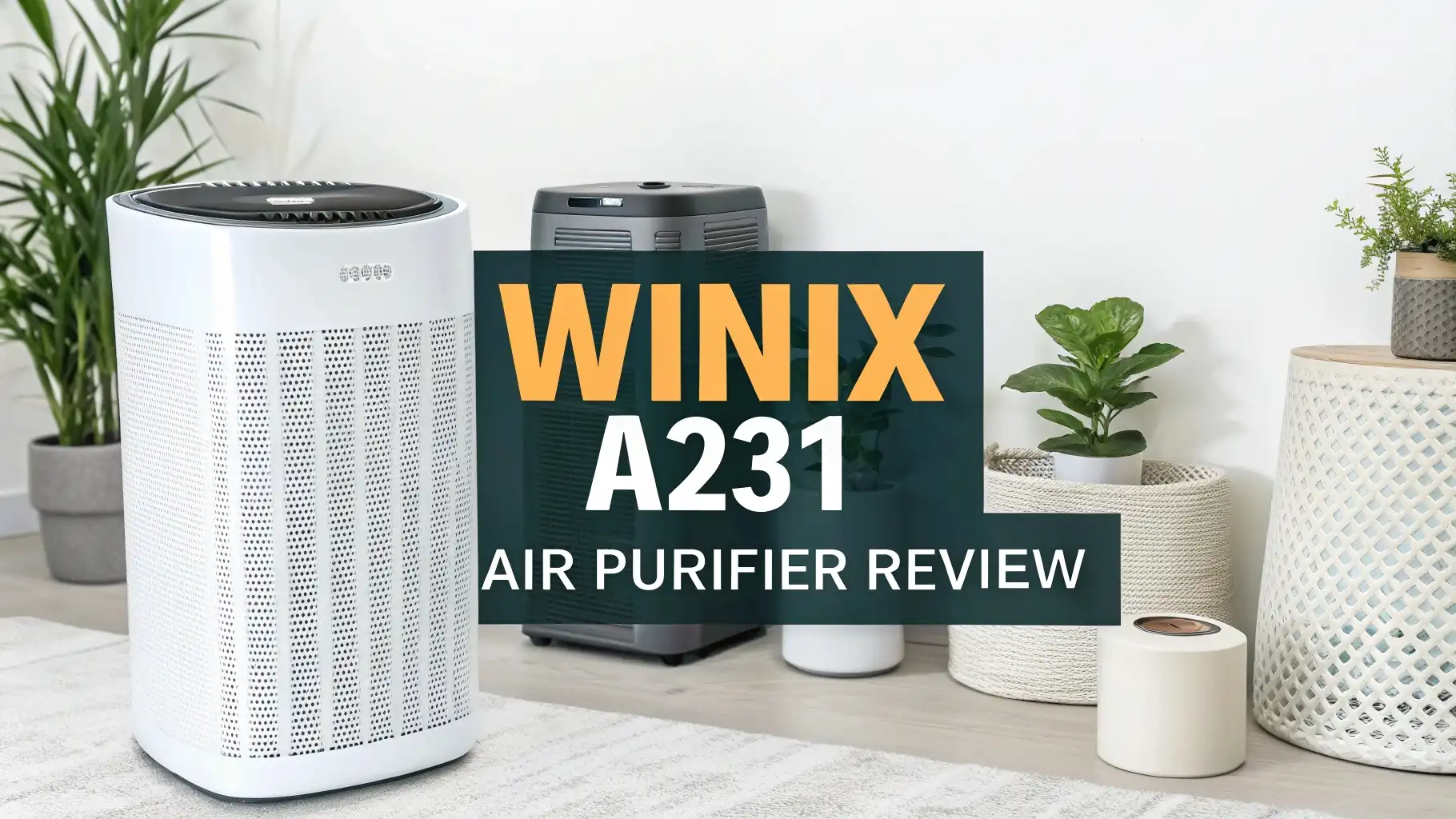
The WINIX A231 stands out in the crowded air purifier market. This device costs around $65 to $80. It offers features typically found in models costing twice as much. The white and grey design looks modern. It fits any home decor style.
This air purifier works best in rooms up to 230 square feet. It can clean larger spaces up to 1,110 square feet in one hour. The compact footprint makes it perfect for bedrooms, dorm rooms, and small offices. You can move it easily from room to room.
The four-stage filtration system handles multiple air quality problems. The pre-filter catches large particles like hair and dust. The True HEPA H13 filter removes microscopic allergens. The activated carbon layer tackles odors. PlasmaWave technology adds an extra layer of purification. This technology uses bipolar ionization. It breaks down pollutants at a molecular level.
AHAM Verifide testing confirms this purifier works as advertised. Independent labs test Clean Air Delivery Rate values. The results show strong performance against dust, smoke, and pollen. These test results give you confidence. You know the device will perform in real-world conditions.
Understanding the Four-Stage Filtration System
The WINIX A231 uses multiple filtration stages. Each stage targets different pollutants. This comprehensive approach ensures cleaner air throughout your space.
The fine mesh pre-filter forms the first defense line. It captures visible particles like pet hair, lint, and large dust particles. This layer protects the more delicate filters below. You can vacuum this pre-filter. Regular cleaning extends the life of your main filter.
The True HEPA H13 filter provides medical-grade filtration. It removes 99.99% of particles down to 0.3 microns. This includes ultra-fine pet dander, pollen grains, mold spores, and bacteria. HEPA filtration works mechanically. Air flows through dense fiber layers. Particles get trapped in the filter media.
The activated carbon filter addresses gaseous pollutants. It absorbs cooking odors, pet smells, and light chemical fumes. The carbon layer in the A231 uses impregnated fabric. This differs from pelleted carbon in larger models. The smaller amount works adequately for light odor control. Heavy VOC problems require specialized purifiers with more carbon.
PlasmaWave technology completes the filtration process. This optional feature creates positive and negative ions. These ions attach to airborne particles. The process neutralizes viruses, bacteria, and chemical vapors. You can turn PlasmaWave on or off. Some users prefer HEPA-only operation. Others appreciate the extra purification power.
Room Coverage and Performance Testing
The WINIX A231 clears air quickly for its size. Independent testing shows impressive results. The device removed all PM1 particles from a 728 cubic foot test room in 40 minutes at top speed. This performance beats the popular Levoit Core 300 by five minutes.
The recommended room size sits at 230 square feet for five air changes per hour. This coverage works for typical bedrooms, home offices, and nurseries. Larger rooms require more time for complete air changes. The device can handle spaces up to 1,110 square feet in one hour.
The CADR ratings tell the real story. This purifier achieves 154 CFM for PM2.5 particles. The top speed PM1 CADR reaches 148 CFM. These numbers compare favorably to competitors. The sub-45 dBA CADR drops to 67 CFM. This quieter operation still provides adequate air cleaning.
Running the purifier without PlasmaWave extends cleaning time slightly. The device reached PM1 zero in 46 minutes. This one-minute difference shows PlasmaWave adds measurable performance. The choice remains yours. Some prefer pure HEPA filtration. Others want maximum cleaning power.
Performance varies based on your air quality. Heavy smoke or high allergen days require longer run times. The auto mode adjusts automatically. The built-in sensor detects particle levels. The fan speed increases when needed. Air quality improves when the fan slows down.
Top 3 Alternatives for WINIX A231


Smart Features and Control Options
The control panel sits on top of the device. Touch-sensitive buttons respond quickly. A circular LED ring surrounds the controls. This ring changes color based on air quality. Red indicates poor air. Amber shows fair conditions. Blue means good air quality.
The auto mode provides hands-free operation. The air quality sensor monitors your room continuously. It detects increases in particle levels. The fan speed adjusts automatically. This feature works great for kitchens. Cooking creates temporary air quality issues. The purifier responds without manual adjustment.
Sleep mode dims all lights. The fan runs at the lowest speed. This creates minimal sound for nighttime use. Some users find even the lowest setting slightly noticeable. The 35.2 dB sound level compares to a whisper. Individual sensitivity varies.
Three manual fan speeds give you control. Low speed works for constant background cleaning. Medium speed handles moderate air quality issues. High speed tackles serious pollution events. You can adjust speed using arrow buttons. The buttons lack backlighting. Finding them in darkness takes practice.
The PlasmaWave toggle lets you enable or disable ionization. Not all manufacturers offer this choice. Many air purifiers force you to use ionization. WINIX respects user preferences. You can test both modes. You can decide which works better for your needs.
One limitation exists. The device lacks settings memory. Power loss resets everything to default. PlasmaWave turns on automatically. You need to reconfigure your preferences. This minor inconvenience rarely affects daily use.
Design and Build Quality
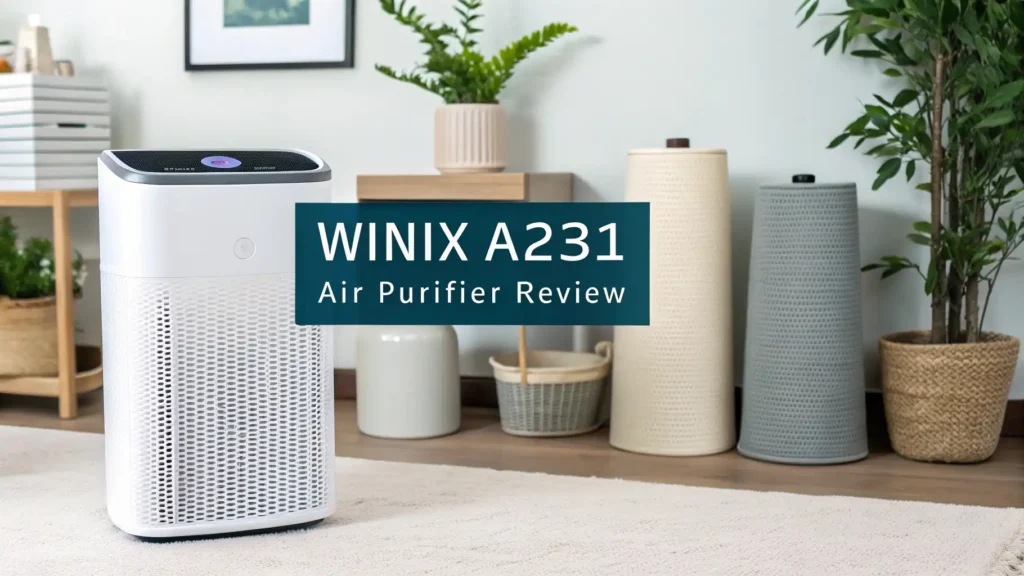
The WINIX A231 features a flared cylindrical design. The base diameter measures 9.5 inches. The height reaches 14.6 inches. This profile looks attractive. It stands out from generic white cylinders.
The white and grey color scheme suits modern interiors. The A230 model comes in all-black. Both versions offer identical performance. Choose based on your aesthetic preference. The materials feel solid. The plastic construction resists fingerprints.
Weight comes in at 7.1 pounds. One person can easily carry it. Moving between rooms takes seconds. The compact size fits on nightstands, desks, and shelves. It requires minimal floor space.
The air intake uses 360-degree design. Air enters from all sides of the base. This allows flexible placement. You can position it near walls. Just maintain a few inches of clearance. The outlet vents through the top. Clean air flows upward into your breathing zone.
The filter access happens from the bottom. Twist the base counterclockwise. The filter compartment opens easily. The design prevents accidental openings. Unlike some competitors, the base stays secure during normal movement. You cannot accidentally release it while cleaning floors.
The air quality sensor sits on the back panel. A small vent houses the detection mechanism. Keep this area clear. Blocked sensors provide inaccurate readings. The auto mode performance depends on accurate air quality detection.
Noise Levels Across Different Speeds
Sound output matters for bedroom and office use. The WINIX A231 produces varying noise levels depending on speed selection. Testing occurred three feet away from the device.
Speed 1 generates 35.2 dB. This whisper-quiet level works for sleep. Sensitive sleepers might still notice it. The fan moves less air at this speed. Cleaning performance drops significantly. The device took 86 minutes to clear test room particles. This 46-minute increase makes low speed impractical for active cleaning.
Speed 2 reaches 48.3 dB. This moderate sound level resembles quiet conversation. It works well for daytime use. Many users find this speed comfortable for working or reading. Air cleaning happens at a reasonable pace. This middle setting balances performance and noise.
Speed 3 peaks at 57.9 dB. This level compares to background music or normal conversation. It provides maximum cleaning power. You notice the sound clearly. Most people find it acceptable for short periods. Use high speed during cooking, after opening windows, or when combating allergens.
The sound quality matters as much as volume. The WINIX A231 produces white noise. This steady whoosh lacks irritating tones or vibrations. Many users find white noise soothing. It can mask other household sounds.
Auto mode varies sound levels throughout the day. The fan speeds up when sensors detect particles. It slows down after air quality improves. This dynamic operation keeps noise minimal while maintaining clean air.
Energy Efficiency and Operating Costs
Running an air purifier continuously affects your electricity bill. The WINIX A231 consumes reasonable power. Understanding long-term costs helps you budget properly.
Power consumption varies by speed setting. Standby mode draws just 0.06 watts. Speed 1 uses 35.4 watts. Speed 2 requires 37.7 watts. Speed 3 peaks at 45.6 watts. These low numbers keep electricity costs down.
Annual electricity costs total approximately $69.55. This calculation assumes 24/7 operation at high speed. Most users run purifiers on auto mode. Actual costs often come in lower. The device qualifies for Energy Star certification. This confirms efficient operation.
Filter replacement costs impact your budget significantly. Genuine WINIX filters cost around $49.99. The manufacturer recommends annual replacement. Your actual replacement schedule depends on usage and air quality. Heavy use in polluted areas requires more frequent changes.
Generic filter options reduce expenses dramatically. Compatible third-party filters cost approximately $15 per unit. Two-pack options bring prices even lower. These aftermarket filters maintain adequate performance. They lack official certification. Many users report satisfactory results.
The filter life indicator removes guesswork. A light illuminates when replacement time approaches. This feature prevents premature filter changes. It also ensures you do not run the device with saturated filters.
Total annual operating costs range from $85 to $120. This includes electricity and filter expenses. Budget options bring costs toward the lower end. Genuine filters push expenses higher. Either way, the WINIX A231 remains affordable to operate.
Air Quality Sensor and Monitoring
The built-in air quality sensor separates the A231 from basic models. This feature adds value without requiring smartphone apps or Wi-Fi connectivity. The sensor provides real-time air quality feedback.
The LED ring displays current conditions instantly. No interpretation required. Red means take action. Blue means relax. Amber indicates moderate concerns. This visual feedback helps you understand your indoor air quality.
The sensor technology detects particulate matter. It measures PM2.5 and larger particles. The sensor responds to dust, smoke, pollen, and similar pollutants. It does not detect gases or odors directly. Carbon monoxide and radon remain undetectable.
Auto mode functionality relies entirely on sensor readings. When particle levels rise, the fan accelerates. Clean air triggers fan slowdown. This automation saves energy. It maintains consistent air quality without constant manual adjustment.
Sensor accuracy improves with proper maintenance. Dust can accumulate on the sensor lens. This causes inaccurate readings. Check the sensor opening monthly. Gently clean with compressed air or a soft brush. Never use water or cleaning solutions.
Placement affects sensor performance. Position the purifier where it can sample representative air. Avoid placing it directly next to pollution sources. The sensor might trigger constantly. Do not hide it behind furniture. Air needs free flow to the sensor.
PlasmaWave Technology Explained
WINIX includes PlasmaWave in most of their air purifiers. This technology generates controversy. Some users love it. Others prefer turning it off. Understanding how it works helps you decide.
Bipolar ionization describes the process. The device creates positive and negative ions. These ions disperse into your room. They attach to airborne particles, bacteria, and viruses. The attachment process neutralizes harmful properties. Particles also clump together. Larger clumps get caught more easily by HEPA filters.
Performance enhancement occurs with PlasmaWave enabled. Testing shows the A231 clears test rooms five minutes faster. This represents approximately 10% improvement. The difference matters for people with severe allergies or asthma.
Safety concerns about ionizers persist. Some ionization technologies produce ozone. Ozone irritates lungs. It can worsen respiratory conditions. WINIX claims PlasmaWave produces no harmful ozone. The technology received California Air Resources Board certification. This indicates safe operation.
The optional nature represents WINIX’s strength. You control whether PlasmaWave runs. A dedicated button toggles the feature. Test both modes yourself. Some people report better results with it enabled. Others notice no difference. Personal experience guides your decision.
Reset behavior presents one frustration. Power loss resets the device. PlasmaWave turns on by default. You must manually disable it each time. This becomes annoying during power outages or when unplugging for cleaning.
Filter Maintenance and Replacement
Proper filter care extends purifier life and maintains performance. The WINIX A231 makes maintenance straightforward. Regular attention ensures optimal air cleaning.
The pre-filter requires vacuuming every few weeks. Pet owners need more frequent cleaning. Remove the bottom panel. Use a vacuum brush attachment on the outer filter surface. This removes accumulated hair and large debris. Proper pre-filter maintenance protects the HEPA filter inside.
HEPA filter replacement happens annually under normal use. Heavy smokers or high-pollution areas shorten filter life. The filter arrives sealed in plastic. Remove this packaging before first use. Failure to do so prevents air from flowing through the filter.
The filter indicator light notifies you when replacement time arrives. This electronic reminder considers run time. It does not measure actual filter condition. Check your filter visually. Darkened filters indicate saturation. White filters suggest remaining life.
Replacement procedures take minutes. Turn off and unplug the device. Twist the base counterclockwise. The filter compartment opens. Remove the old filter. Insert the new one. Align any tabs or guides. Replace the base. Twist clockwise to lock. Reset the filter indicator by holding the filter button.
Generic versus genuine filters create budget decisions. Genuine WINIX filters guarantee performance. They maintain warranty coverage. Generic filters cost less. Quality varies by manufacturer. Read reviews before purchasing. Many aftermarket options perform well. Some fail prematurely.
Comparing WINIX A231 to Levoit Core 300
The Levoit Core 300 represents the main competitor. Both target small rooms. Both cost under $100. Performance differences help you choose between them.
Price comparison shows similar positioning. The Levoit typically sells for $90 to $100. The WINIX A231 often costs $65 to $80. This $15 to $20 difference adds up over time. Budget-conscious buyers appreciate the savings.
Cleaning speed favors the WINIX A231. Independent testing shows five minutes faster particle clearing. This difference matters during high-pollution events. Faster cleaning means quicker relief from symptoms.
Features tilt toward WINIX. The A231 includes an air quality sensor and auto mode. The Core 300 lacks these features. Levoit offers them in the Core 300S. That model costs $50 more. The WINIX provides better value for smart features.
Filter costs advantage WINIX significantly. Genuine WINIX filters cost $49.99. Levoit charges $70 for genuine Core 300 filters. This $20 annual difference accumulates. Five years of ownership saves $100 on WINIX filters alone.
Design preferences vary personally. The Levoit presents a taller cylinder. The WINIX shows a flared profile. Both look modern. Choose based on aesthetic preference. The WINIX locks more securely. The base does not accidentally release during cleaning.
Smart features favor Levoit’s Core 300S model. That device connects to smartphones. You can control it remotely. The app provides detailed air quality data. This costs extra. Most users find the WINIX sensor adequate. Remote control rarely proves necessary for small rooms.
Best Use Cases for WINIX A231
This air purifier excels in specific situations. Understanding ideal applications helps you maximize value. Consider whether these scenarios match your needs.
Small bedrooms represent the perfect environment. The 230 square foot coverage matches typical bedroom sizes. Quiet operation on low speed allows sleep. Auto mode responds to nighttime allergen increases. The compact footprint fits on nightstands.
Home offices benefit from continuous air cleaning. Computer equipment generates dust. Enclosed spaces trap pollutants. The A231 runs quietly enough for video calls on medium speed. Clean air supports focus and productivity.
Dorm rooms present size and budget constraints. Students need affordable solutions. The A231 costs less than dinner for two. It fits in tight quarters. Easy transport between home and campus matters. The light weight helps.
Apartments with pets struggle with dander. Small spaces concentrate allergens. The HEPA filter captures pet particles effectively. The pre-filter catches visible hair. Regular vacuuming of the pre-filter manages heavy pet shedding.
Kitchens benefit from auto mode operation. Cooking creates temporary air quality issues. The sensor detects smoke and odors. The fan speeds up automatically. Air clears quickly after meal preparation.
Nurseries require clean air for developing lungs. Babies spend significant time in their rooms. The A231 filters out harmful particles. Sleep mode keeps noise minimal. Parents appreciate the filter indicator. You know when to replace filters.
Limitations to Consider
No product suits everyone perfectly. The WINIX A231 has limitations worth understanding. These drawbacks might matter depending on your situation.
Room size restrictions represent the main limitation. Spaces larger than 230 square feet receive fewer air changes per hour. Large living rooms need bigger purifiers. The A231 takes much longer to clean expansive areas. Consider the 5500-2 model for larger rooms.
Carbon filtration capacity remains limited. The thin fabric-style carbon layer handles light odors. Heavy cooking smells linger longer. Chemical sensitivities require specialized VOC purifiers. Serious odor problems need pelleted carbon filters.
No smart connectivity exists. Tech enthusiasts miss smartphone apps. Remote control requires physical presence. Scheduling demands smart plugs. The lack of connectivity bothers some users. Others appreciate the simplicity.
Settings memory failure frustrates users. Power loss resets everything. PlasmaWave enables automatically. You must reconfigure preferences. Frequent power outages make this annoying. Stable power environments minimize this issue.
Arrow buttons lack lighting. Finding speed controls in darkness proves difficult. The buttons do not illuminate. Memory develops with use. Consider this if you adjust settings at night frequently.
Generic filter quality varies significantly. Some work great. Others fail quickly. Research before buying aftermarket filters. Stick with highly-rated options. Poor filters waste money and reduce performance.
Real User Experiences and Reviews
Amazon customers provide valuable insights. The WINIX A231 maintains a 4.5-star rating across nearly 2,000 reviews. This strong rating suggests general satisfaction. Common themes emerge from user feedback.
Positive comments emphasize performance and value. Users appreciate the quick air clearing. Many notice reduced allergy symptoms. Pet owners report less dander-related sneezing. The auto mode receives consistent praise. Users love the set-it-and-forget-it convenience.
Noise levels generate mixed reactions. Some users find all speeds acceptable. Others consider high speed too loud for sleep. Individual sensitivity varies greatly. Most reviewers agree the sound quality remains pleasant. The white noise lacks annoying tones.
Build quality earns approval. Users report sturdy construction. The device survives drops and bumps. Children and pets cannot easily damage it. The simple design means fewer parts fail.
Negative feedback centers on a few issues. Some users dislike PlasmaWave. They report a slight electrical smell. The optional nature allows disabling this feature. Filter indicator accuracy receives criticism. Some find it triggers too early. Others complain it waits too long.
Customer service experiences vary. Some users praise responsive support. Others struggle with warranty claims. WINIX offers two-year warranties. Keep your purchase receipt. Documentation helps with any issues.
Is the WINIX A231 Worth Your Money?
The WINIX A231 delivers exceptional value for small spaces. It cleans air faster than similarly priced competitors. The four-stage filtration handles multiple pollutant types. Smart features typically cost extra from other brands.
Budget-conscious buyers should strongly consider this purifier. The initial price stays low. Operating costs remain reasonable. Filter expenses do not break the bank. You get features found in pricier models.
Performance meets expectations for appropriately sized rooms. The 230 square foot recommendation proves accurate. Larger spaces need bigger devices. Proper room matching ensures satisfaction.
Feature balance suits practical users. The air quality sensor works reliably. Auto mode provides convenience. The lack of smartphone connectivity keeps operation simple. Tech features do not justify extra cost for most people.
Limitations remain manageable for target users. Small room residents work within coverage limits. Light odor control suffices for most situations. The missing smart features rarely matter in compact spaces.
Alternative options exist at different price points. The Levoit Core 300 costs more but offers similar performance. Budget options sacrifice features or performance. Higher-end models provide more coverage and better carbon filtration. The WINIX A231 occupies a sweet spot. It balances price, performance, and features effectively.
This air purifier deserves recommendation for small bedrooms, home offices, dorm rooms, and apartments. It works particularly well for allergy sufferers, pet owners, and people sensitive to dust. The combination of performance, features, and affordability makes it stand out. You get more than you pay for with the WINIX A231.
FAQs
How long does the WINIX A231 filter last?
The WINIX A231 filter typically lasts 12 months under normal use conditions. This timeline assumes average daily operation in moderately polluted environments. Your actual filter life varies based on several factors. Homes with pets require more frequent changes. Heavy smokers shorten filter lifespan significantly. High-pollution areas saturate filters faster.
Can the WINIX A231 remove cigarette smoke?
The WINIX A231 can reduce cigarette smoke but with limitations. The True HEPA filter captures smoke particles effectively. These tiny particles get trapped in the filter media. The activated carbon layer absorbs some smoke odors. However, the thin carbon fabric provides limited odor control. Heavy smoking overwhelms the carbon capacity quickly.
Does the WINIX A231 produce ozone?
The WINIX A231 with PlasmaWave technology does not produce harmful ozone levels according to the manufacturer. The device received California Air Resources Board certification. This strict certification confirms safe operation. CARB standards represent the toughest ozone emission limits in the United States. PlasmaWave uses bipolar ionization.
How often should I clean the WINIX A231 pre-filter?
Clean the pre-filter every 2 to 4 weeks for optimal performance. Pet owners should vacuum it weekly. The pre-filter captures visible particles like hair, lint, and large dust. These accumulate quickly on the outer surface. Regular cleaning extends the main HEPA filter life. Clogged pre-filters restrict airflow.
What is the difference between WINIX A230 and A231?
The only difference between models involves exterior color. The A230 comes in all-black. The A231 features white and grey coloring. All internal components remain identical. Both use the same filter. Both offer identical performance. Both include the same features and controls. The CADR ratings match exactly.
Can I use the WINIX A231 in a large living room?
The WINIX A231 can operate in large living rooms but with reduced effectiveness. The device cleans up to 1,110 square feet in one hour. This provides just one air change hourly. Health experts recommend five air changes per hour for optimal air quality. A large 500 square foot living room receives only 2.2 air changes hourly.