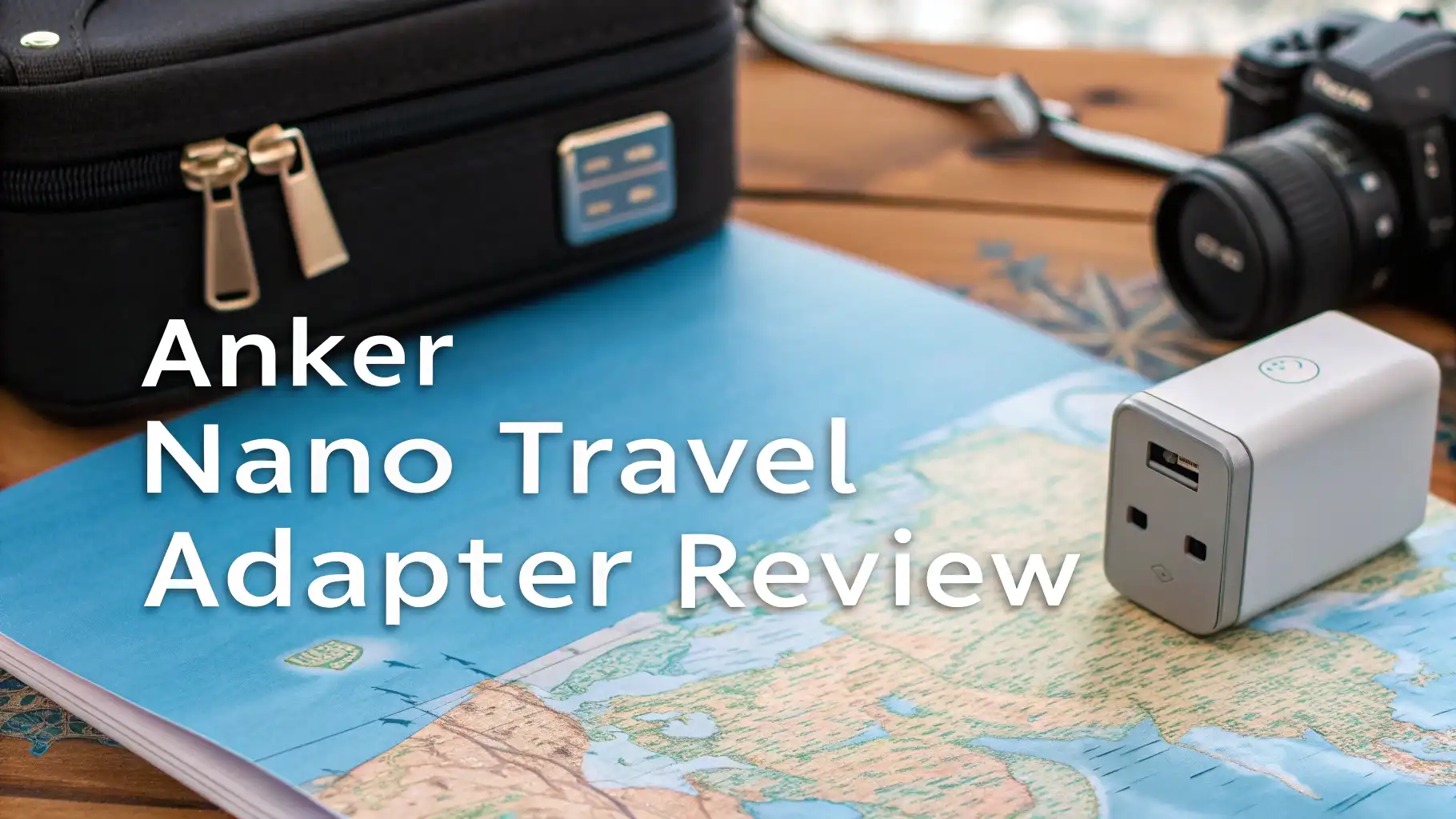
Anker Nano Travel Adapter Review in 2026
Traveling the world means juggling different power outlets, multiple devices, and limited bag space. You need a reliable charging solution that works across continents without weighing you down.
The Anker Nano Travel Adapter promises to solve this problem with its slim design and multi-device charging capability.
This review explores everything you need to know about this compact powerhouse and the best alternatives available on Amazon.
Key Takeaways:
- Five devices at once: The adapter lets you charge a smartphone, tablet, earbuds, power bank, and another device simultaneously through its five integrated ports without needing multiple chargers.
- Ultra-slim profile: At just one inch thick, this adapter fits easily into small tech pouches and side pockets, making it significantly more portable than bulky cube-shaped alternatives.
- Works in 200+ countries: The four different plug types cover virtually every destination, from European cities to Asian countries to Australian beaches, so you can travel without worrying about compatibility.
- Smart temperature control: Built-in monitoring prevents overheating during extended charging sessions, protecting both the adapter and your expensive electronics from heat-related damage.
- Budget-friendly price: At around $25.99 on Amazon, you get universal compatibility and multiple charging ports for less than half the cost of premium 65W+ alternatives while still enjoying reliable Anker quality.

Understanding the Anker Nano Travel Adapter
The Anker Nano Travel Adapter brings together universal compatibility and modern charging technology in one compact package. This device serves travelers who want to simplify their tech setup without sacrificing charging capacity. The adapter measures approximately one inch in thickness, making it one of the slimmest options available today.
This adapter works as a bridge between different electrical systems around the globe. You can use it in North America, Europe, the United Kingdom, and Australia thanks to its four built-in plug configurations. The sliding mechanism lets you select the right plug type for your destination. You press down, slide to the side, and listen for a click that confirms the prongs lock into position.
The smart temperature control system monitors heat levels constantly during operation. This safety feature protects your devices from potential damage caused by excessive heat buildup. The system adjusts power distribution automatically when it detects temperature changes, ensuring consistent performance throughout your charging session.
Five Ports That Handle Your Charging Needs
The front of the adapter features one AC outlet that accepts two-prong plugs from various devices. This outlet lets you plug in standard chargers, power adapters, or other electronics that need direct wall power. The outlet does not support three-prong grounded plugs, which limits compatibility with some appliances.
Two USB-A ports sit at the bottom of the device. Each port delivers up to 12 watts of power, suitable for charging older smartphones, basic tablets, or accessories like wireless earbuds. These ports work well with devices that do not require fast charging speeds.
Two USB-C ports complete the charging setup. The primary USB-C port provides up to 20 watts of fast charging power, enough to quickly charge modern smartphones like iPhones or Samsung Galaxy devices. The secondary USB-C port offers 15 watts, perfect for tablets or smaller devices. Both ports use Power Delivery technology for efficient charging.
When you connect multiple devices simultaneously, the adapter distributes power among all active ports. The total output decreases as you add more devices, but the adapter handles this automatically without requiring manual adjustments.
Global Compatibility Without Voltage Conversion
This adapter works in more than 200 countries and regions around the world. The Type A plugs serve North American outlets, Type C plugs fit European sockets, Type G prongs work in the United Kingdom and Hong Kong, and Type I plugs match Australian and Chinese outlets. This coverage includes virtually every major travel destination.
You need to understand an important limitation. The adapter does not convert voltage. It only adapts the physical plug shape to fit different outlets. Most modern electronics like phones, laptops, and tablets automatically handle voltage differences between 110V and 240V systems. High-power appliances like hair dryers, curling irons, or electric kettles might not work safely without a separate voltage converter.
The universal AC outlet on the bottom accepts plugs from different regions. This feature provides flexibility when you encounter recessed outlets or tight spaces where the sliding prongs cannot fully extend. You can plug a device into this universal socket instead of using the regional prongs.
Top 3 Alternatives for Anker Nano Travel Adapter


Design Features That Enhance Portability
The slim rectangular shape measures significantly smaller than traditional cube-style adapters. This compact form factor fits easily into the mesh pockets of tech organizers, the side compartments of backpacks, or even jacket pockets. The reduced size does not compromise functionality or durability.
The matte finish resists fingerprints and minor scratches during travel. The material feels solid in hand without adding unnecessary weight. The entire unit weighs just a few ounces, making it barely noticeable in your luggage.
An illuminated ring on the front glows blue when the adapter receives power. This indicator confirms the adapter is functioning properly before you start charging devices. The light helps troubleshoot connection issues in unfamiliar hotel rooms or hostels. Some travelers find the brightness distracting in dark rooms, but a small piece of tape easily solves this minor inconvenience.
The sliding prong mechanism feels sturdy after repeated use. The switches move smoothly and lock firmly into place when extended. The design prevents accidental retraction when inserting the adapter into an outlet, maintaining a secure connection throughout the charging process.
Power Output and Charging Performance
The 20-watt USB-C output charges most smartphones from 0 to 50 percent in approximately 30 minutes. This speed matches what you get from standard phone chargers included in the box with new devices. The charging rate slows down as the battery approaches full capacity, which protects battery health over time.
Tablets charge more slowly due to their larger battery capacity. An iPad Air might take three to four hours to reach full charge from the main USB-C port. This speed proves adequate for overnight charging but might feel slow if you need a quick top-up during the day.
The adapter cannot adequately power laptops that require more than 20 watts. A MacBook Air might maintain its current battery level while sleeping but will not charge while you actively use it. Gaming laptops or mobile workstations definitely need their original chargers for proper operation.
Charging multiple devices simultaneously reduces the power available to each port. Two devices sharing the USB-C ports receive a combined 15 watts total rather than 20 watts each. This reduction rarely causes problems for phones and accessories but extends overall charging time compared to using dedicated chargers.
Real-World Travel Testing Results
Testing across multiple countries confirmed the adapter’s reliability. The Type C plugs worked flawlessly in French, German, and Spanish outlets. The Type G prongs fit securely in British sockets without wobbling. The Type I configuration connected properly in Australian hotels and cafes.
One challenge appeared with recessed outlets in older buildings. Some European hotels have deep-set sockets where the sliding prongs cannot fully extend due to surrounding walls or furniture. The universal outlet on the bottom provided a workaround in these situations by accepting a standard European plug.
The low-profile design proved advantageous in crowded airport charging stations. The adapter stayed connected reliably while bulkier alternatives sometimes fell out under cable weight. The slim body fit into tight spaces between adjacent outlets better than cube-shaped competitors.
Charging overnight in various accommodations presented no issues. A typical setup included a smartphone, wireless earbuds, a smartwatch, and a portable power bank all connected simultaneously. Everything reached full charge by morning without overheating or connection problems.
Safety Features and Temperature Management
The built-in temperature monitoring system activates automatically during operation. Sensors track internal heat levels and adjust power distribution when temperatures rise. This protection prevents damage to both the adapter and connected devices during extended charging sessions.
The adapter includes surge protection that guards against voltage spikes. This feature proves especially valuable when traveling to regions with unstable electrical systems. The protection activates faster than standard circuit breakers, potentially saving expensive electronics from damage.
Fire-resistant materials form the outer casing. These materials meet international safety standards for electrical devices. The construction provides peace of mind when leaving devices charging unattended in hotel rooms or rentals.
The absence of a grounded three-prong outlet means some devices lose their grounding protection. This limitation primarily affects larger electronics like laptops with metal cases. Most portable devices use two-prong plugs anyway, making this less of a concern for typical travelers.
Comparing Value Against Premium Options
The $25.99 price point positions this adapter in the budget-friendly category. You get universal compatibility, multiple charging ports, and reliable Anker quality without spending $50 or more on high-wattage alternatives. The value proposition appeals to leisure travelers and occasional business travelers.
Premium adapters costing $40 to $60 typically offer 65 watts or more of USB-C power output. This increased capacity suits travelers who need to charge laptops alongside phones and accessories. The extra cost makes sense for digital nomads or remote workers who depend on their laptops daily.
Budget options under $15 often lack built-in USB ports entirely. These simple plug adapters require you to bring separate USB wall chargers for phones and tablets. You end up carrying more items and needing multiple outlets, reducing the convenience factor considerably.
Ideal Users and Use Cases
The Anker Nano serves leisure travelers perfectly. Vacation trips typically involve charging phones, cameras, and personal accessories rather than high-power laptops. The five ports handle family travel needs where multiple people need charging access simultaneously.
Weekend travelers appreciate the compact size. The adapter fits easily into small duffel bags or carry-on luggage without consuming valuable packing space. The slim profile makes it ideal for minimalist packing strategies and capsule travel wardrobes.
Business travelers with modest power needs find this adapter sufficient. Quick business trips where you primarily use your phone and occasionally your tablet work well. Extended work trips requiring frequent laptop use demand higher-wattage solutions with grounded outlets.
Budget-conscious students studying abroad benefit from the affordable price and multi-device support. Dorm rooms and shared accommodations often have limited outlets, making the five-port capability especially useful. The durable construction withstands frequent packing and unpacking throughout a semester.
Maintenance and Long-Term Durability
The adapter requires minimal maintenance during regular use. Occasionally wiping the exterior with a dry cloth removes dust and debris. Avoid using liquid cleaners that might seep into the sliding mechanisms or port openings.
The sliding prongs stay functional after hundreds of extensions and retractions. The locking mechanism maintains its clicking feedback over time. No visible wear appears on the finish after months of travel in various climates and conditions.
The USB ports maintain their connection strength after repeated cable insertions. Loose ports that fail to grip cables properly plague cheap adapters, but the Anker Nano avoids this common failure point. The ports feel snug and secure even after extended use.
Storing the adapter in a protective case or tech pouch extends its lifespan. This protection prevents damage from sharp objects in luggage and reduces exposure to moisture in humid environments. A simple padded pouch provides adequate protection during travel.
Limitations You Should Know
The 20-watt maximum USB-C output cannot support laptop charging adequately. Mobile professionals who work extensively on their laptops need to pack their original laptop chargers separately. This limitation means carrying two charging solutions instead of one universal option.
The two-prong AC outlet excludes devices requiring grounding. Some electronics mandate three-prong connections for safety reasons. Medical devices, certain power tools, and professional equipment might not work properly or safely with this adapter.
The sliding prong mechanism requires a learning curve. First-time users sometimes forget to press down before sliding, causing the prongs to stick. The click confirmation helps, but you need a few tries to develop muscle memory for smooth operation.
Recessed outlets in older buildings sometimes prevent the prongs from extending fully. This architectural challenge affects all travel adapters to varying degrees. Bringing a short extension cord provides a backup solution when you encounter problematic outlets.
How Does It Compare to Cube-Style Adapters?
Traditional cube-style adapters offer more USB ports and higher total power output. Models like the EPICKA Universal Travel Adapter include four USB-A ports, one USB-C port, and a grounded AC outlet. This configuration serves travelers with multiple high-power devices better.
The increased functionality comes with significantly larger dimensions. Cube adapters measure three to four inches on each side, making them challenging to pack in smaller bags. They consume more luggage space and weigh noticeably more than the slim Anker Nano.
Cube adapters protrude further from wall outlets. This extension makes them susceptible to sagging under cable weight, potentially causing poor connections. The Anker Nano stays flush against the wall, maintaining better contact with the outlet.
For travelers prioritizing portability over maximum power, the Anker Nano wins easily. For those needing to charge laptops and multiple high-draw devices, cube-style adapters justify their bulk with superior capability.
Making Your Purchase Decision
Consider your typical travel pattern before purchasing. Short leisure trips with basic charging needs suit the Anker Nano perfectly. Extended business travel with laptop dependency requires higher-wattage alternatives with grounding capability.
Review your device inventory honestly. Count how many items you regularly charge simultaneously. Five ports handle most personal electronics comfortably, but larger families or tech-heavy travelers might need additional capacity.
Evaluate your budget alongside your requirements. The $25.99 price delivers excellent value for occasional travelers. Frequent travelers might invest more in premium options with faster charging speeds and greater power output.
Read current Amazon reviews before finalizing your choice. Recent customer feedback reveals real-world performance issues or quality concerns that might not appear in professional reviews. Look for patterns in complaints rather than isolated incidents.
Frequently Asked Questions
Can the Anker Nano Travel Adapter charge my laptop?
The adapter provides up to 20 watts through its main USB-C port. This power level works for maintaining a laptop’s battery while it sleeps but cannot charge it during active use. Laptops typically need 30 watts minimum for charging while operating, with many requiring 45 to 65 watts. You should bring your laptop’s original charger for proper charging capability.
Does this adapter convert voltage for hair dryers?
No, the Anker Nano does not convert voltage. It only adapts plug shapes to fit different outlets. Hair dryers, curling irons, and other high-heat appliances draw too much power and require voltage conversion. Using a hair dryer designed for 110V in a 240V outlet without a converter can damage the appliance or create safety hazards.
How many devices can I safely charge at once?
The adapter safely charges five devices simultaneously through its one AC outlet, two USB-A ports, and two USB-C ports. The power distributes automatically among connected devices. Keep in mind that total output decreases when using multiple ports, extending charging time compared to using dedicated chargers.
Will the blue light keep me awake at night?
The blue indicator light glows brightly when the adapter receives power. Some travelers find this distracting in dark hotel rooms. You can easily cover the light with a small piece of electrical tape or a sticker without affecting the adapter’s functionality. This simple solution eliminates the brightness issue completely.
Does the adapter work with three-prong grounded plugs?
No, the AC outlet only accepts two-prong ungrounded plugs. Devices requiring a grounded three-prong connection for safety will not work properly with this adapter. Most modern phone chargers and small electronics use two-prong plugs, so this limitation rarely affects typical travelers.
How do I know which prong configuration to use?
Check your destination country’s electrical system before traveling. Type A prongs work in North America and Japan. Type C fits European countries. Type G serves the United Kingdom, Ireland, and Hong Kong. Type I matches Australia, New Zealand, and China. The sliding switches clearly mark each plug type for easy identification.