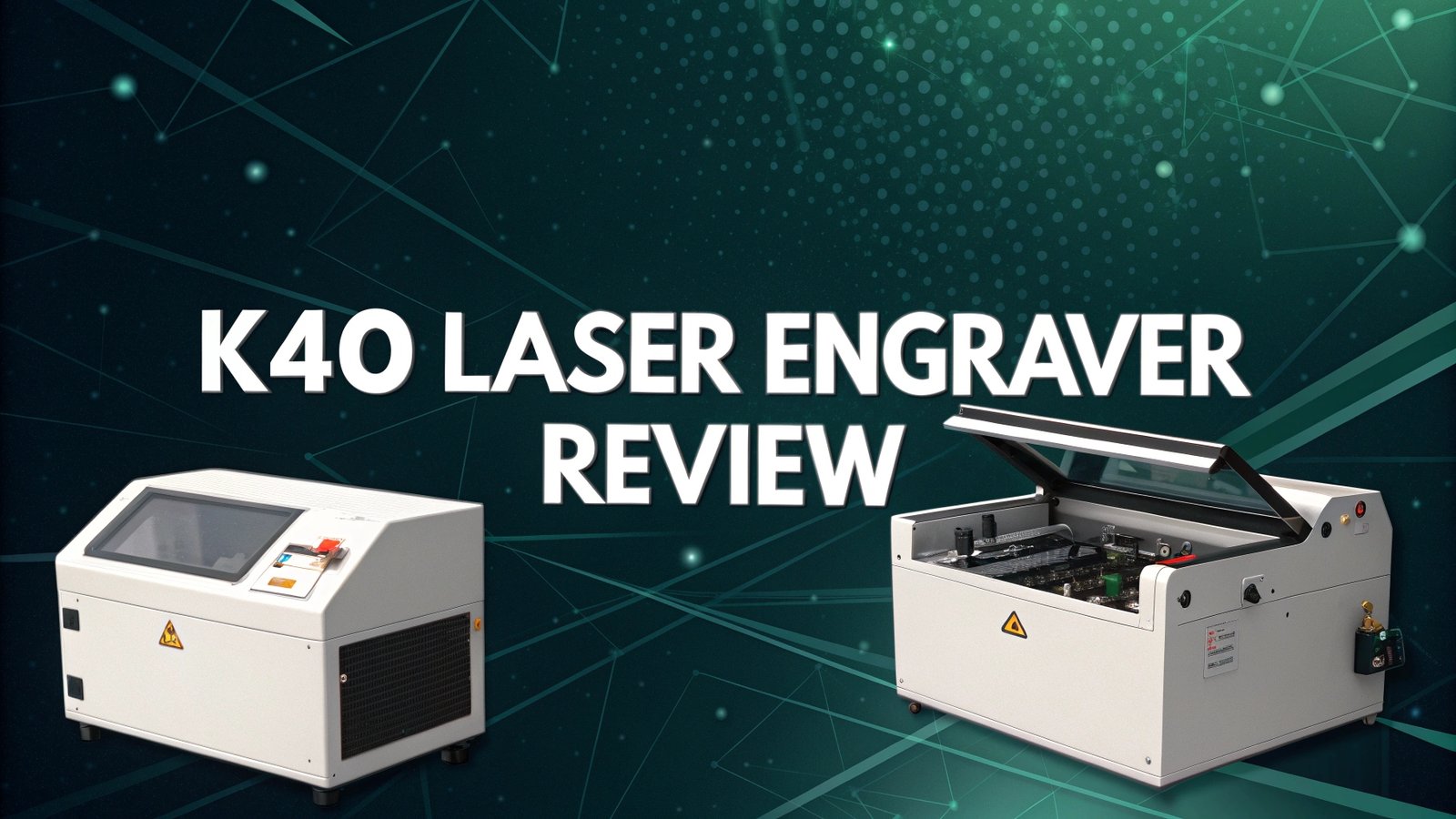
K40 Laser Engraver Review: Complete Guide in 2026
Looking for an affordable entry point into laser engraving and cutting? The K40 laser engraver has become a popular choice for hobbyists, crafters, and small business owners.
These compact CO2 laser machines offer impressive capabilities at budget-friendly prices. This comprehensive review explores the best K40 laser engravers available on Amazon, helping you make an informed decision for your creative projects.
The K40 laser cutter market has exploded with options in 2024, ranging from basic models to feature-rich units with advanced cooling systems and software compatibility.
Key Takeaways
- Affordable Entry Point: K40 laser engravers typically cost between $400-$900, making them accessible for hobbyists and small businesses starting their laser cutting journey
- Versatile Material Compatibility: These machines excel at cutting and engraving wood, acrylic, leather, paper, fabric, and glass, with cutting depths up to 6mm depending on the material
- Compact Desktop Design: Most K40 units feature a 12″ x 8″ work area, perfect for small workshops and home offices without requiring extensive space
- Software Flexibility: Modern K40 models support popular software like LightBurn and LaserGRBL, offering user-friendly interfaces for both beginners and advanced users
- Cooling System Requirements: Proper water cooling is essential for K40 operation, preventing laser tube damage and ensuring consistent performance during extended use
- Modification Potential: The K40 platform is highly customizable, with numerous upgrade options available for users who want to enhance performance and capabilities over time

OMTech K40+ 45W CO2 Laser Engraver
The OMTech K40+ stands out as the premium option in the K40 category. This 45-watt CO2 laser engraver delivers exceptional power for its class, handling materials with precision and speed. The machine features a 12″ x 8″ working area that accommodates most small to medium projects perfectly.
The OMTech K40+ includes several advanced features that justify its higher price point. The adjustable laser head allows for precise focus control across different material thicknesses. Built-in air assist helps achieve cleaner cuts by removing debris and preventing material burn-back. The machine comes with LightBurn and LaserGRBL compatibility, making it accessible to users at all skill levels.
What sets this model apart is its robust construction and improved cooling system. The laser tube benefits from better thermal management, extending its operational life significantly. Users report excellent cutting performance on materials up to 6mm thick, including plywood, acrylic, and leather. The engraving quality produces fine details suitable for professional applications.
Installation requires some technical knowledge, but OMTech provides comprehensive documentation and customer support. The machine arrives mostly assembled, with users needing to connect the cooling system and perform initial calibration. Regular maintenance involves checking water levels and cleaning optical components.
VEVOR 40W Desktop CO2 Laser Engraver
No products found.
The VEVOR 40W represents the budget-conscious choice in the K40 market. Despite its lower price point, this machine delivers solid performance for basic laser engraving and cutting tasks. The water-cooled laser tube ensures stable operation during extended use.
This model features CorelDRAW compatibility alongside support for common file formats like EMF, JPG, PLT, and WMF. The 12″ x 8″ cutting area matches industry standards for K40 machines. The laser moves at speeds up to 11.8 inches per second, providing reasonable throughput for hobby projects.
Build quality reflects the budget pricing, with some users reporting minor alignment issues out of the box. However, for makers just starting their laser engraving journey, the VEVOR provides excellent value. The machine handles thin wood, acrylic, and fabric effectively, though thicker materials may require multiple passes.
The cooling system requires careful attention, as proper water flow is critical for laser tube longevity. Users should invest in distilled water and monitor temperature during operation. Software setup may require patience for beginners, but online communities provide extensive support and tutorials.
ANKZONE 40W Laser Engraver

The ANKZONE 40W targets beginners with its DIY-friendly approach. This machine includes helpful features like a honeycomb cutting panel and air assist system that enhance cutting quality. The included accessories make it easier for newcomers to achieve professional results.
Key features include built-in air assist that removes cutting debris and prevents flame-ups. The honeycomb bed provides excellent material support while allowing debris to fall through. The machine’s compact footprint fits easily on most workbenches while providing the standard 8″ x 12″ cutting area.
The ANKZONE excels at detailed engraving work on materials like wood, acrylic, and leather. Users praise its ability to produce fine text and intricate patterns. The laser power effectively cuts through 3mm acrylic and 6mm plywood in single passes at appropriate speeds.
Software compatibility includes popular options, though users may need to experiment with settings for optimal results. The machine benefits from community-shared parameter databases that provide starting points for different materials. Regular maintenance keeps performance consistent, with users reporting reliable operation after proper setup.
Top 3 Alternatives for K40 Laser Engraver

No products found.

Understanding K40 Laser Technology
K40 laser engravers utilize CO2 laser technology to cut and engrave materials. The “K40” designation refers to the approximate 40-watt power output, though actual power varies between models. These machines generate a focused laser beam through a glass tube filled with carbon dioxide gas mixture.
The laser beam wavelength of 10.6 micrometers works exceptionally well with organic materials. Wood, paper, leather, and acrylic absorb this wavelength efficiently, allowing for clean cuts and precise engraving. The beam diameter typically measures 0.1-0.2mm, enabling fine detail work.
Power control happens through pulse width modulation, allowing users to adjust intensity for different materials and effects. Lower power settings create light engraving, while maximum power achieves deep cuts. Proper focus distance is critical for optimal results, typically set 2-3mm above the material surface.
Beam alignment requires periodic adjustment as mirrors can shift during transport or extended use. Most K40 machines include alignment tools and procedures. Regular calibration ensures consistent results across the entire cutting bed.
Material Compatibility and Cutting Capabilities
K40 laser engravers excel with non-metallic materials. Wood represents the most popular application, with species like basswood, plywood, and MDF producing excellent results. Cutting thickness typically ranges from paper-thin to 6mm, depending on material density and laser power.
Acrylic cutting produces glass-like edges when parameters are properly tuned. Clear acrylic cuts cleanly at moderate speeds, while colored varieties may require adjusted settings. Engraving creates frosted effects perfect for illuminated displays.
Leather engraving creates beautiful contrast effects, with the laser darkening natural leather surfaces. Synthetic leathers require testing as some contain PVC, which produces harmful fumes when laser cut. Always verify material composition before processing.
Glass engraving works through surface etching, creating permanent marks without cutting through. Coated glass produces higher contrast results. Metal engraving requires special coatings or anodized surfaces, as bare metal reflects CO2 laser wavelengths.
Software Options and User Experience
Modern K40 laser engravers support multiple software platforms for different user preferences. LightBurn represents the gold standard for laser software, offering intuitive design tools and precise machine control. Its camera alignment features help position work accurately.
LaserGRBL provides a free alternative with basic functionality suitable for simple projects. The software handles G-code generation and machine communication effectively. File format support includes SVG, DXF, and bitmap images.
CorelDRAW integration appeals to users already familiar with vector graphics. Many manufacturers provide dedicated plugins that streamline the workflow from design to production. Parameter databases help users find optimal settings for different materials.
Software learning curves vary significantly between platforms. LightBurn offers the most comprehensive feature set but requires investment. Free alternatives work well for basic applications but may lack advanced capabilities like camera positioning and complex toolpath optimization.
Safety Features and Requirements
K40 laser engravers require proper safety precautions for safe operation. Eye protection is mandatory when the laser is operating, though most machines include protective enclosures that contain the beam during normal operation.
Ventilation systems are essential for removing fumes generated during cutting and engraving. Many materials produce potentially harmful gases that require extraction. Users should install dedicated exhaust fans vented to the outside.
Fire safety deserves particular attention, as laser cutting can ignite materials under certain conditions. Never leave the machine unattended during operation, and keep appropriate fire extinguishers nearby. Air assist systems help prevent flames by blowing debris away from the cutting area.
Emergency stop switches should be easily accessible and regularly tested. Many modern K40 machines include automatic shutdown features that activate if cooling water stops flowing or temperatures exceed safe limits.
Cooling System Essentials
The water cooling system represents the most critical component of K40 laser engravers. The CO2 laser tube generates significant heat during operation, requiring constant cooling to prevent damage. Distilled water is essential to prevent mineral buildup in the cooling channels.
Flow rate monitoring ensures adequate cooling across the entire laser tube length. Many users install flow meters and temperature sensors for added protection. Coolant temperature should remain below 25°C for optimal laser performance and tube longevity.
Regular maintenance includes checking for leaks and replacing coolant when it becomes contaminated. Algae growth can block cooling channels, so some users add small amounts of algicide or use commercial laser coolants.
Chiller units provide superior temperature control compared to basic pump systems. While more expensive, chillers maintain consistent temperatures even during extended operation periods. Investment in proper cooling extends laser tube life significantly.
Maintenance and Longevity
Regular maintenance keeps K40 laser engravers operating at peak performance. Optical component cleaning is crucial for maintaining beam quality and cutting power. Mirrors and lenses accumulate debris that reduces effectiveness over time.
Belt tension affects positioning accuracy and should be checked periodically. Loose belts cause positional errors, while overtightened belts increase wear on stepper motors. Lubrication of linear bearings ensures smooth movement and reduces mechanical noise.
Laser tube replacement eventually becomes necessary as power output decreases over time. Quality tubes typically last 8,000-12,000 hours with proper care. Power meters help monitor tube condition and plan replacement timing.
Software updates and parameter refinement improve results over time. User communities share optimized settings for different materials and applications. Keeping detailed operation logs helps identify patterns and predict maintenance needs.
Upgrade Possibilities and Modifications
The K40 platform offers extensive modification potential for users wanting enhanced capabilities. Controller upgrades like the Cohesion3D or Smoothieboard provide advanced features and better software compatibility.
Bed leveling systems improve cutting consistency across the entire work area. Z-axis automation allows automatic focus adjustment for different material thicknesses. Rotary attachments enable engraving on cylindrical objects like bottles and tubes.
Air assist upgrades significantly improve cutting quality by providing stronger airflow and better debris removal. Exhaust fan improvements enhance fume extraction and workspace safety. LED lighting upgrades improve visibility during setup and operation.
Larger laser tubes can increase cutting power, though this requires corresponding upgrades to power supplies and cooling systems. Bed size extensions accommodate larger projects but may require software modifications.
Cost Analysis and Value Proposition
K40 laser engravers provide exceptional value for entry-level laser cutting. Initial costs typically range from $400-$900 depending on features and included accessories. Operating costs remain relatively low with main expenses being electricity and occasional coolant replacement.
Laser tube replacement represents the largest long-term cost, typically ranging from $100-$300 depending on tube quality and power rating. Proper maintenance extends tube life significantly, improving overall cost-effectiveness.
Material costs vary widely based on project requirements. Bulk purchasing reduces per-unit costs for commonly used materials like acrylic and plywood. Waste reduction through efficient nesting maximizes material utilization.
Revenue potential exists for users pursuing commercial applications. Custom engraving services, personalized gifts, and small-scale manufacturing can generate income. Return on investment timelines vary based on usage patterns and pricing strategies.
User Community and Support
The K40 laser engraver community provides invaluable resources for users at all skill levels. Online forums like Reddit’s r/lasercutting offer troubleshooting help and project inspiration. Facebook groups provide real-time assistance and parameter sharing.
YouTube channels offer visual tutorials covering everything from basic operation to advanced modifications. Manufacturer support quality varies significantly between brands, with some providing excellent documentation while others offer minimal assistance.
Parameter databases shared by the community accelerate the learning process for new users. Material testing results help users avoid potentially dangerous combinations. Modification guides provide step-by-step instructions for common upgrades.
Local maker spaces often have experienced K40 users willing to share knowledge. Hands-on learning opportunities accelerate skill development beyond what online resources alone can provide.
Frequently Asked Questions
What materials can a K40 laser engraver cut?
K40 laser engravers work best with organic materials including wood, acrylic, leather, paper, fabric, and rubber. They can engrave on glass and anodized metal but cannot cut through metal materials. Always avoid PVC and other chlorinated plastics as they produce toxic fumes.
How thick materials can a K40 laser cut?
Most K40 laser engravers can cut through materials up to 6mm thick, depending on the material type and density. Soft woods and acrylic cut more easily than hardwoods or dense materials. Multiple passes may be required for thicker materials.
Is the K40 laser engraver suitable for beginners?
Yes, K40 laser engravers are excellent for beginners due to their affordable price point and extensive community support. However, they do require some technical knowledge for setup and maintenance. Users should be comfortable with basic computer skills and following safety procedures.
What software works with K40 laser engravers?
Popular software options include LightBurn, LaserGRBL, and K40 Whisperer. LightBurn offers the most comprehensive features but requires a license purchase. LaserGRBL is free and provides good basic functionality for most projects.
How much maintenance do K40 laser engravers require?
K40 laser engravers require regular maintenance including cooling system checks, optical cleaning, and belt tension adjustments. Daily use requires weekly maintenance checks, while occasional users can perform monthly inspections. Proper maintenance significantly extends machine life.
Can I upgrade my K40 laser engraver?
Yes, K40 laser engravers offer extensive upgrade potential. Common modifications include controller upgrades, improved cooling systems, air assist enhancements, and bed leveling systems. The modular design makes most upgrades straightforward for technically inclined users.