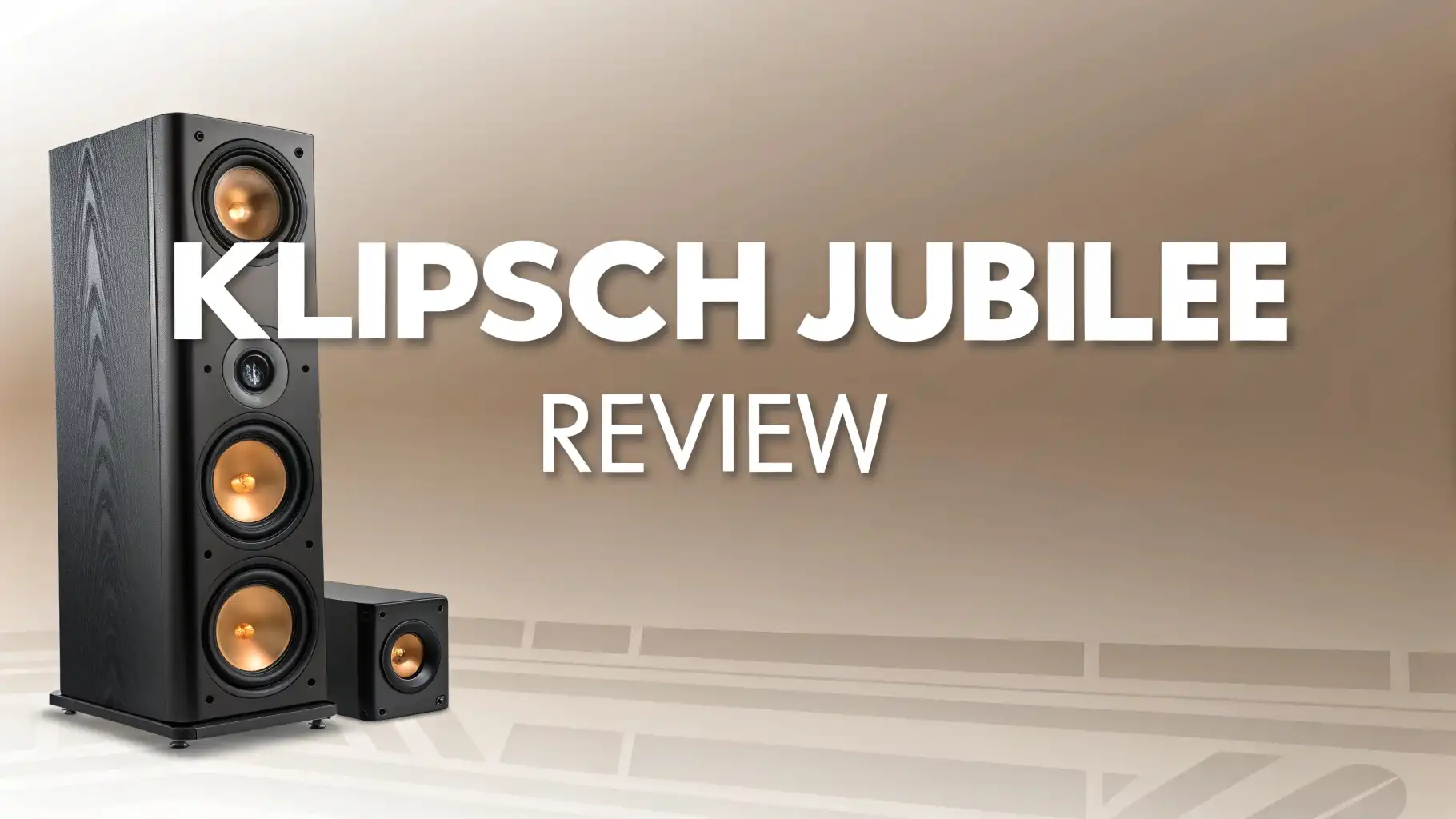
Klipsch Jubilee Review 2026: Best Choice for Real Results
You walk into your listening room and flip the switch. The music starts flowing through two massive towers that stand nearly six feet tall. The sound hits you like a wave of pure emotion.
Every note feels real. Every instrument breathes life into your space. This is not just another speaker system. This is the Klipsch Jubilee, and it might just be the last speaker you ever buy.
This review will show you exactly what the Jubilee offers, how it performs, and whether it should be your next major audio investment.
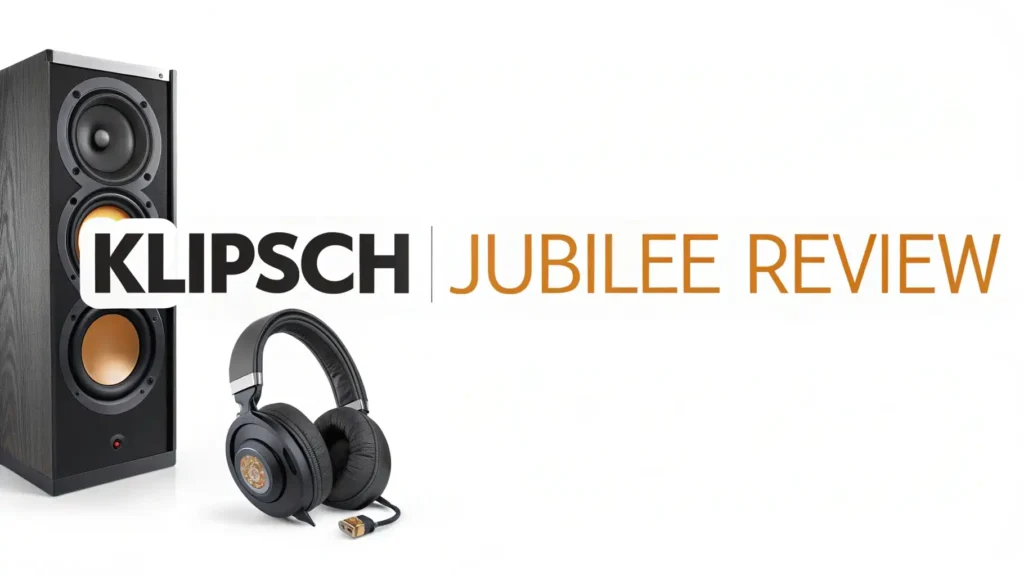
Key Takeaways:
- Horn-Loaded Technology: The Jubilee uses a fully horn-loaded two-way design that creates incredible efficiency. You get 10 to 20 times more output than conventional speakers with the same amplifier power.
- Massive Size and Build Quality: Each speaker stands 68 inches tall and weighs over 400 pounds. They feature book-matched real wood veneer in American Walnut or Black Ash finishes that look absolutely stunning.
- Active Crossover System: The included external DSP crossover network adjusts time delay and phase for perfect coherency. This means smoother sound with zero compromises across the entire frequency range.
- Exceptional Sensitivity Ratings: With 107 dB sensitivity for low frequencies and 110 dB for high frequencies, these speakers can reach 125 dB output levels with minimal amplifier power. You feel the music instead of just hearing it.
- American Craftsmanship: Each Jubilee is hand-built in Hope, Arkansas, where Paul W. Klipsch started the company in 1946. Every speaker is made to order, which means your pair is uniquely yours. The company backs them with a 10-year warranty because they are built to last generations.

Understanding the Klipsch Heritage Legacy
The Heritage line from Klipsch represents more than just speakers. It represents a philosophy. Paul W. Klipsch started building speakers in 1946 with one goal in mind. He wanted to bring live music into your home without compromise. The company has stayed true to that vision for nearly 80 years.
The Jubilee sits at the top of this legendary lineup. It combines classic Heritage styling with modern acoustic technology. The horn-loaded design traces back to PWK’s original concepts. But everything has been refined and perfected for today’s listening standards.
You get speakers that look like fine furniture pieces. The book-matched wood veneer creates mirror images between the left and right speakers. This attention to detail shows in every aspect of the build quality. These are not speakers you hide away. They become focal points in your room.
Design and Build Quality That Commands Attention
Walking up to a pair of Jubilee speakers feels like approaching works of art. These towers stand 68 inches tall, which puts them at eye level for most people. They measure 25.12 inches wide and 28.03 inches deep. The sheer physical presence makes a statement before you even power them on.
Each speaker weighs 405 pounds. This is not a casual purchase you move around easily. You will need professional installation help. But that weight comes from serious construction. The cabinets use thick panels and internal bracing that eliminates unwanted vibrations.
The wood veneer options look gorgeous. American Walnut offers warm, rich tones with beautiful grain patterns. Black Ash provides a modern, sophisticated appearance. Both finishes use real wood that is carefully matched between speakers. You can see the quality in every detail.
Horn-Loaded Technology Explained Simply
Horn loading sounds complicated but the concept is straightforward. Think of how megaphones work. They amplify sound naturally without needing extra power. Klipsch applies this principle to speaker design with incredible results.
The Jubilee uses horns for both the tweeter and the woofer. This creates what engineers call a fully horn-loaded two-way system. The high frequency horn extends down to 400 Hz. This is much lower than typical tweeters handle. The low frequency horn extends up from the bass region to meet it perfectly.
This approach delivers massive efficiency gains. Regular speakers push air directly with their drivers. This wastes energy and creates distortion. Horn-loaded speakers guide the air through carefully shaped channels. The horn acts like a transformer that matches the driver to the room.
The Active Crossover System Revolution

Most speakers use passive crossovers. These sit inside the cabinet and split the audio signal between drivers using capacitors and inductors. They work but they create compromises. The Jubilee takes a completely different approach with an external active DSP crossover.
This means the signal splits before it reaches the amplifiers. Each driver gets its own dedicated amplification channel. The digital signal processor adjusts timing, phase, and frequency response with precision that passive components cannot match.
The benefits become obvious when you listen. The transition between the woofer and compression driver disappears completely. You hear a seamless presentation that sounds like one perfect driver handling everything. Phase coherency remains perfect across the entire frequency range.
Top 3 Alternative for Klipsch Jubilee


Sound Performance That Brings Music to Life
The first time you hear the Jubilee properly set up, you understand what all the fuss is about. The sound does not come from the speakers. It comes from the space between them. Musicians appear in your room with realistic scale and presence.
The frequency response extends from 18 Hz to 20 kHz. The low end reaches deep into subwoofer territory. You feel kick drums in your chest. Bass guitars have weight and texture. Orchestral performances reveal the full power of tympani and double basses.
The midrange clarity stands out immediately. Vocals sound natural and uncolored. You hear every nuance in the singer’s voice. Acoustic instruments have proper tonality. Electric guitars bite when they should and smooth out when the music calls for it.
High frequencies sparkle without ever becoming harsh or fatiguing. The large titanium diaphragm moves easily to reproduce delicate details. Cymbals have proper shimmer and decay. String sections maintain their silky texture even at loud volumes.
Room Requirements and Placement Considerations
The Jubilee demands respect for its size. You cannot stick these speakers in a small bedroom and expect magic. They need proper space to perform at their best. Klipsch recommends rooms that are at least 20 feet long with good volume.
The speakers work best when placed away from walls. You want at least three feet behind them and two feet from side walls. This gives the rear port room to breathe and prevents bass buildup. The front baffle should angle slightly toward your listening position.
Ceiling height matters too. Eight foot ceilings work but higher is better. The speakers stand tall and benefit from vertical space. Ten to twelve foot ceilings let them really open up and create that concert hall atmosphere.
Room treatments help but are not absolutely necessary. The Jubilee design naturally reduces problems that plague other speakers. The controlled directivity means less energy bounces off side walls. The efficiency means you can play at lower volumes and still hear everything.
Amplifier Pairing and Power Requirements

The efficiency of the Jubilee changes the amplifier game completely. You do not need massive power. In fact, using too much power can actually work against you. The speakers are so sensitive that amplifier noise becomes the limiting factor.
Many audiophiles pair the Jubilee with tube amplifiers. The warm, natural presentation of tubes complements the detailed sound of the horns perfectly. Amplifiers producing 20 to 50 watts per channel work beautifully. The First Watt designs from Nelson Pass are popular choices.
Solid state amplifiers also work great. Look for clean designs with low noise floors. Class A amplifiers suit the Jubilee well. Brands like Pass Labs, Accuphase, and Luxman get mentioned frequently by owners. You want quality over quantity when it comes to watts.
Comparing Jubilee to Other Heritage Models
The Klipsch Heritage lineup includes several iconic models. Understanding where the Jubilee fits helps you decide if it is right for you. Each model has its own character and strengths.
The Klipschorn represents the original PWK design from 1946. It requires corner placement and uses the room boundaries as part of the bass horn. The sound is magical in the right room. But the placement restrictions limit flexibility. The Jubilee offers similar performance with more placement freedom.
The La Scala sits just below the Jubilee in size and price. It uses a three-way design compared to the Jubilee’s two-way approach. The La Scala offers fantastic midrange and works well in smaller rooms. But it cannot match the Jubilee’s deep bass extension or overall coherency.
The Cornwall IV provides a more compact option at around half the Jubilee’s price. It still delivers that Heritage sound signature with excellent dynamics. The Cornwall works great for many listeners. But moving up to the Jubilee reveals another level of refinement and scale.
Value Proposition at the $35,000 Price Point

Spending $35,000 on speakers requires serious consideration. You can buy excellent speakers for much less. But the Jubilee offers something special that justifies the price for the right buyer.
First, consider the build quality. These speakers will outlast most other audio equipment you own. The 10-year warranty shows Klipsch’s confidence. But realistically, properly maintained Jubilees should perform perfectly for 30 to 50 years or more. That makes the cost per year very reasonable.
Second, look at the performance. The Jubilee competes with speakers costing $50,000 to $100,000 or more. The horn-loaded design and active crossover deliver sound quality that most conventional speakers cannot match at any price. You get true high-end performance without ultra high-end pricing.
Third, factor in the efficiency. You can drive these speakers with modestly powered amplifiers. This saves money on electronics. A $3,000 tube amplifier can make the Jubilees sing. Compare that to other flagship speakers that demand $20,000 amplifiers to perform well.
Real Owner Experiences and Long-Term Satisfaction
Jubilee owners consistently report high satisfaction levels. Many describe the purchase as their “end game” speaker. They stop searching and just enjoy the music. This says something important about the product.
The efficiency becomes addictive. Owners love how tube amplifiers bring out the best in these speakers. The natural dynamics and effortless presentation make long listening sessions enjoyable. Fatigue never sets in because the sound remains clean and unstressed.
The build quality impresses everyone who sees them in person. Photos do not capture the sheer presence of the speakers. Visitors often comment on both the appearance and the sound. The Jubilee becomes a conversation piece that also delivers world-class performance.
Some owners mention the learning curve for optimal setup. Getting the placement right takes experimentation. Finding the best amplifier pairing requires some trial and error. But once you dial everything in, the results justify the effort.
Setting Up Your Jubilee System for Success
Getting the most from your Jubilee investment requires attention to several factors. The good news is that none of this is complicated. You just need to be methodical in your approach.
Start with proper placement. Use a measuring tape to ensure symmetry. The speakers should be equal distance from side walls and back walls. Toe them in slightly so the axis crosses about two feet behind your listening position. This creates the most cohesive soundstage.
Take time with the amplifier selection. Borrow equipment from dealers if possible. Listen to tube amplifiers and solid state designs. Trust your ears. The Jubilee reveals differences between electronics clearly. Find the amp that makes your favorite music sound most engaging.
Cable selection matters but do not go crazy. Quality speaker cables with proper gauge work fine. The short runs from amplifier to crossover and crossover to speakers mean you do not need expensive exotic cables. Spend your money on better source components instead.
How Does the Jubilee Compare to Modern Competition

The speaker market in 2026 offers many excellent options. Understanding how the Jubilee stacks up against modern competitors helps you make an informed choice.
JBL K2 S9900 speakers offer similar horn-loaded technology at a comparable price point. They deliver fantastic sound with that classic JBL character. But most listeners who compare them side by side prefer the Jubilee’s coherency and the smoother integration between drivers.
Wilson Audio Sasha speakers represent a completely different approach using conventional drivers. They sound exceptional with incredible resolution. But they require massive amplifier power and careful setup. The Jubilee offers similar performance with more flexibility.
Magico A5 speakers show what modern materials and engineering can achieve. They deliver precise, accurate sound with impressive imaging. But they lack the dynamic life and emotional engagement that horn-loaded designs provide. The Jubilee sounds more real.
Who Should Buy the Klipsch Jubilee
The Jubilee is not for everyone. Understanding the ideal buyer profile helps determine if these speakers match your needs and preferences.
You should consider the Jubilee if you have a dedicated listening room. These speakers need space to perform properly. A home office or bedroom will not work. You need a real room where the speakers can be set up correctly and left in place.
You are a good candidate if you value efficiency and plan to use tube amplifiers. The Jubilee lets you enjoy low-powered SET amplifiers that sound magical. This combination creates an emotionally engaging listening experience that is hard to match.
You fit the profile if you listen to a wide range of music. The Jubilee handles everything from intimate jazz to large-scale orchestral works. Rock music has impact and drive. Classical music has proper scale and refinement. Nothing sounds wrong.
You should look elsewhere if you have placement restrictions. The speakers need to be away from walls with room to breathe. They work best with symmetrical placement. If your room forces awkward positioning, other speakers might work better.
Frequently Asked Questions
What amplifier power do I need for the Klipsch Jubilee speakers?
You need surprisingly little power thanks to the incredible efficiency. Many owners successfully use tube amplifiers producing only 20 to 50 watts per channel. The high sensitivity ratings of 107 dB to 110 dB mean a few watts create impressive volume levels. Quality matters much more than quantity when choosing amplification for the Jubilee.
Can the Klipsch Jubilee work in a medium-sized room?
The Jubilee performs best in rooms that are at least 20 feet long with adequate volume. Smaller rooms can work but may not let the speakers fully showcase their capabilities. You need proper space behind and beside the speakers for optimal performance. Room size affects bass response and soundstage development significantly.
How does the Jubilee sound compare to the Klipschorn?
The Jubilee offers more flexibility in placement while delivering similar sound quality to the legendary Klipschorn. The Klipschorn requires corner placement and uses room boundaries as part of the bass horn. The Jubilee works as a freestanding speaker. Many listeners prefer the Jubilee’s more coherent presentation thanks to the two-way design and active crossover.
Is the $35,000 price justified for the Jubilee speakers?
The price reflects hand-built American craftsmanship, premium materials, advanced technology, and exceptional performance. The included active crossover system adds significant value. The efficiency means you save money on amplification. Compared to other speakers in the high-end market, the Jubilee offers excellent value for what it delivers. The 10-year warranty and expected decades of reliable service make the investment reasonable.
What maintenance do Klipsch Jubilee speakers require?
The Jubilee requires minimal maintenance. Dust the cabinets regularly with a soft cloth. Clean the wood veneer occasionally with products designed for fine furniture. Check the connection terminals periodically to ensure they remain tight. The horn design protects the drivers from dust and damage. These speakers are built to last with very little ongoing care needed.
Can I use the Jubilee speakers for home theater applications?
While the Jubilee excels for music listening, it can work in a home theater setup. You would need three Jubilee speakers for left, center, and right channels plus appropriate surrounds. The cost becomes very high for this application. Most people choose the Jubilee specifically for stereo music reproduction where it truly shines.